Broken baggage that leads to emotional baggage: is it inevitable? No way!

Fellow Brave Travelers,
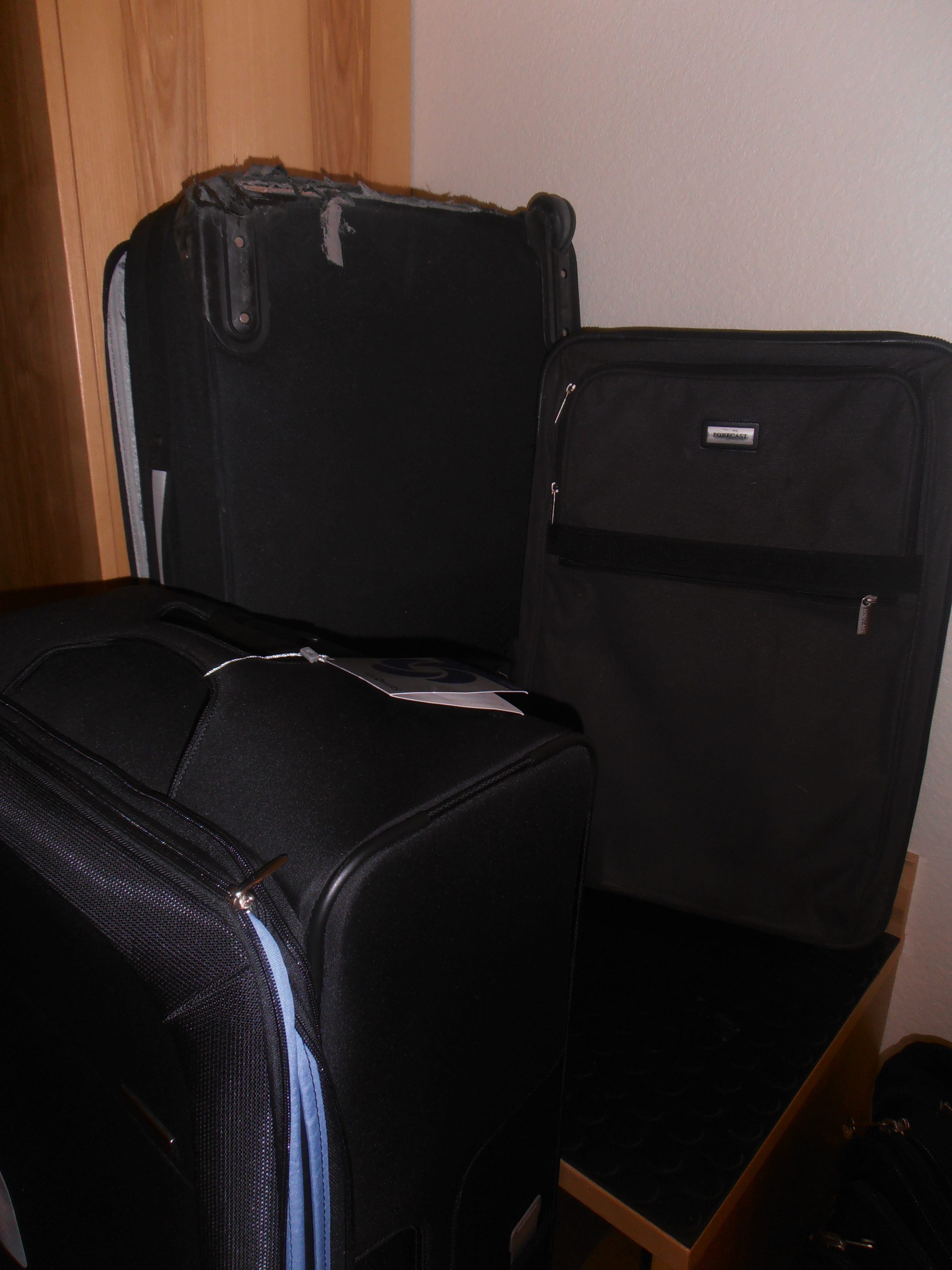
While in Lithuania last week, my beloved Forecast wheeled suitcase of ten years succumbed to the stress of those attractive but treacherous cobblestone streets of the Old Town.  The right wheel cracked and wore down to the size of a marble, and the bottom seams ripped open about an hour later.  I dragged my bag, I yanked it up Soviet-style perehod walkways that were devoid of escalators, and I might have cursed a bit as I tried to pull it up yet another hill — wiling it along because the idea of having to abandon the bag, and buy a new one on the fly, really upset me.   Ultimately,  I ended up leaving the bag at the dumpster at the bus station in Riga, Latvia.  There was just no way I could take it through the next three countries with me.

Was this hard to do?  You bet.  Journey thousands of miles away from home with only yourself, your loved ones (if you’re lucky) and the two-three pieces of luggage at your feet, and you won’t want to part with anything, even if everyone is staring at you as the wheels screech and the rubber starts to burn right off.  So how do you move on when your big beautiful bag is a symbol of how you overcame so many emotional and psychological obstacles to go abroad?   Here are some suggestions.

1. Face facts that your luggage is no longer useable — the earlier, the better.  If you keep using broken luggage that is difficult to pull or lift, you risk injuring yourself (strained back, wrist, etc.) and dealing with a very stressful scenario of having to seek medical help in an unfamiliar area.  You also risk creating a serious hazard if the bag collapses and items fall out in the middle of a pedestrian walkway or as you board a train or bus.  Letting go of your baggage will save you trouble — literally and figuratively.

2. Take a piece of your old bag with you to make it easier to move on.  In my case, I snipped off the front compartment of my bag and used it to provide some valuable cushioning for the souvenir books I brought home.

3. Make buying your new bag as enjoyable and interesting as possible.  It’s an unexpected chance to shop for something practical at the nearest foreign mall or department store.  Tell the shop manager where you’re from and what happened to you.  They might not give you a discount, but they will certainly be sympathetic and wish you happy travels — and help you find a great new piece that will journey with you on many great adventures to come.
Perceptions of Anxiety Around the World: Do they Matter to You?

Sure, you’re “just a tourist” when you land in a foreign country and start exploring.  You’re an American or Canadian, most likely, and you’re a guest, and you’re used to being treated a certain way.  But still, you find yourself subject to another place’s cultural perceptions of mental health, and you need to understand their resources for managing anxiety — just in case you have a psychiatric emergency.  Here’s a look at attitudes toward anxiety in China, one of the fastest-growing tourist destinations in the world.

In many ways China is a country of extremes, with standards, resources, and practices varying dramatically across the country, and psychiatric care is no different.   China is also one of the fastest growing tourist destinations in the world, with many travelers planning and taking their own trips despite significant cultural and language barriers.

Hong Kong, which is viewed by many as part of China and by many others as still an independent entity, is very westernized and accessible, including over twenty hospitals with near-identical care to what you would receive at home, and fluent English-speaking staff.  The following considers mainland China.

Inconsistency in Standards.  Only in the last thirty years or so – with the relaxation of communist attitudes and controls – have western models of psychiatric treatment been introduced in China, and there are a growing number of western hospitals in the large cities (including Beijing, Shanghai, and Tianjin).  Access to westernized care in rural areas (particularly in the far west) ranges from challenging to find, to virtually nonexistent.

Human Rights Concerns.  Only in 2012 did China adopt laws protecting the human rights of mental health patients, including a person’s right to not be hospitalized against their will, and to choose whether to receive treatment.  You’ll need to be very careful about what care you consent to, and under what conditions.  In more rural areas without western hospitals, it would be best if you did not go to a clinic alone.  If you have no travel companion, try asking a hotel employee to come with you, just to be safe.

Financial Motives.  Unfortunately there have been cases of foreigners being over-treated in hospitals or clinics with the goal of collecting more money for services rendered.  While it’s highly unlikely you would be given medications of improper dosage, you’ll need to be careful to only approve of and receive the amount of care you see fit.  While it’s true that money is just money, the trauma of being misled and dealing with an exorbitant and unfair bill is not going to do your nerves any good.

Preoccupation with Suicide.  High suicide rates (often attributed to modernization and pressure to succeed, particularly among young people) is a serious problem in China, particularly in the cities.  Despite your status as a tourist, an attending physician may ask you a number of questions related to suicidal tendencies and self-harm.

Limited Public Tolerance.  Be careful about showing any overt psychiatric symptoms in public, particularly near police.  Certain elements of a panic or anxiety attack may be viewed as a disturbance of the peace, and you may receive only minimal leniency for being a foreigner.