Afraid to Vacation in These Places? You’re Not Alone

Should you visit them anyway?  Absolutely, if you’ve dreamed of going there for years.

Where, exactly, am I talking about?  Egypt?  Yemen?  Mali?  El Salvador?  No, I don’t mean countries that are considered major and immediate threats to your safety and security, and routinely make the State Department’s travel warning list.   I’m talking about six major global cities that many tourists shy away from for various reasons: concerns about their geopolitical position,  racism, unfamiliar laws, severe air pollution, military unrest, and other hazards that have a statistically minimal chance of  threatening your well-being on a trip.   These cities have dubious reputations — and yet they offer visitors an amazing array of things to do and see that outweigh their drawbacks every time.  Without further ado, these are my picks of the  greatest big cities you might be missing out on.

1. Seoul, South Korea.  This Asian gem has the drawback of being only about 40 miles away from the border of one of the most dangerous dictatorships on the planet.  And yes, North Korea has threatened Seoul many times — and not a whole lot has happened.  Year in and year out, Seoul is on par with Tokyo in terms of its appeal: ultra-modern, with a high standard of living and brimming with cultural treasures, attractions, and great shopping and dining — and boasting some of the safest streets in Asia.  Yet people stay away in favor of Japanese and Chinese cities that are a lot farther outside a possible North Korean missile strike.  What if?  What if?  What if you got on a plane to see Seoul in addition to Tokyo and Beijing?  Your chances of getting trapped in a North Korean air raid are about the same as your likelihood of never reading another blog for the rest of your life.

2. Cape Town, South Africa.  When most people think of South Africa, three things usually come to mind: soccer, racism, and crime.  While it’s true that crime rates are high in South Africa, and that the devastation caused by apartheid can still rear its ugly head, Cape Town does not suffer from these problems nearly as much as the capital city of  Johannesburg.  And this doesn’t even begin to give Cape Town the credit it deserves for being such an amazing destination: on the ocean, full of natural wonders and cosmopolitan nightlife, and teeming with friendly and open-minded people.  Still make you uncomfortable to go somewhere that’s been so deeply affected by racism?  Go there, smile, have a drink, start talking and forget what you and everyone else looks like.

3. Macau (Special Administrative Region of China).  This densely populated “Las Vegas of China” has often gotten bad press for its untamed casino life, toxic air pollution, and chaotic, pedestrian-unfriendly streets.  It’s also one of only two great cities in China that most Westerners can visit without a visa — and it’s a short, very scenic ferry ride from Hong Kong .  Yes, you don’t want to breathe deeply in Macau; you don’t want to head there restless either, since the whole SAR is only about twelve square miles.  Perhaps that’s why most people are in the casinos — and when the air does clear after a good rainstorm, go outside and check out some of the amazing architecture inspired by the fusion of classic Chinese style and Portuguese colonialism.  ( Just make sure not to jaywalk.)

4. Singapore. At first, Singapore might seem like an odd pick for this list.  But does anyone remember Michael Fay?  He’s the young American who, in 1994, was caned and imprisoned for four months for non-violent crimes (vandalism and theft).  Since then, Singapore has been as notorious for its draconian laws as its diverse attractions and spotless streets.  If you tend to do reckless or impulsive things when traveling (particularly when drunk and not in full control of your inhibitions) you might fear doing something in Singapore that could cost you time in jail, or worse.  Even slobs or gum-snappers may have a hard time (forget to flush a public toilet?  You could be fined.  And don’t bring chewing gum into the country).   So what do you do?  Recognize how easy it is to assimilate.  Surrounded by law-abiding, respectful citizens in the downtown area, in the malls, and at the tourist attractions, you’ll realize how painless it is to take a cue from other folks and be on your best behavior.  And because it’s Singapore, your chance of being the victim of theft, assault, and tourist scams are slim to none.

5. Belgrad, Serbia.  Many of us are old enough to remember the carnage of the Balkans War unfold on TV in the 90s.  The war is long over and several functioning democracies have emerged from the former Yugoslavia — but since Serbian rebels were blamed for the bulk of the violence and ethnic cleansing in the 90s war, a negative view of Serbia, and its capital Belgrad, persists.  Is it fair?  If travel teaches us anything, it’s to not stereotype cultures, or hold individuals accountable for sins committed by armies over fifteen years ago.  Last I checked, Belgrad is a vibrant, intriguing city where multiculturalism works, and the welcome mat is laid out for the curious tourist.

6. Tel Aviv, Israel. The number of security issues Tel Aviv faces on a weekly, monthly, and yearly basis might cause anyone to cross this incredible city off their travel wish-list.  Who, you might think, wants to step into the “state of perpetual turmoil”?  Well, lots of tourists, every season of the year.  They’ve discovered that the city’s inhabitants are a special breed entirely — resilient, determined people who manage their fate of constant uncertainty by knowing how to have a good time, and knowing how to make the most of every day.  Israel is not going to solve its problems anytime soon — and Tel Aviv is not exactly “going anywhere.”  You might as well drop in, go to the beach, exercise the usual safety precautions, and have an incredible cultural experience.

OLYMPUS DIGITAL CAMERA

Nervous about venturing outside the “quintessential” and “safe” vacation spots?   It’s natural — but pack your common sense, and go anyway 
Those Little Things that Cause Us Stress on a Trip… that We Keep Doing

…usually to make someone else feel more comfortable, or happy, even though it’s our vacation, and we might very well be in self-gratification overdrive… and if not, then our minds are already full of plans and distractions, addresses and schedules.  Sound familiar?  Even if you consider yourself a “tunnel-vision traveler,” the kind that has their nose to the itinerary and way more interest in the sights around them than the people, you might find yourself spending more energy than you planned in order to make things easier or nicer for someone else.  Personally, I never cease to be amazed by fellow tourists who struggle against their own impatience, social anxiety, discomfort, or pride in the name of kindness or sensitivity to those around them (or waiting for them at home).  Here are some observations of how we often make things a little harder for ourselves abroad… and usually don’t feel bad about it.

Speaking the Local Language When You Know the Other Person Speaks Good English.  Sometimes even perfect English.  But not necessarily comfortable English.  What’s the big deal?  you ask.   Can’t the thousands of underpaid and overworked hotel receptionists at all the Americanized hotels out there just help us in our own language so we don’t have to choke on a few recitations out of a Lonely Planet phrasebook?  Of course.  But does it sometimes irritate or tire them out?  Yes, they’ve told me when I’ve actually asked.  Personally, I’ve been amazed at how exhausted and disconnected I can feel from my own thoughts and feelings when I have to navigate back and forth all day between two languages.  For some of us it’s natural; for others, it’s a major brain-drain, and can make a person feel downright lonely.  If I see a depressed Parisian hotel manager hang up the phone after clearly losing an argument in English, I’m going to do my best to converse with him in my rudimentary French.  Yes, it stresses me out.  But it helps him regain his confidence and frame of mind.

Smiling at Service People. Should we smile at the maid for cleaning our room?  Will she think it’s condescending?  Should we smile at the TSA security guy who looks like he’s ready to drop from exhaustion?  Will he think I’m trying to distract him?  Should I smile at the Muslim couple running a convenience store in East London, who just helped me pick up all my spilled groceries off the floor (what’s to smile about? Will the man think I’m being too forward?) or should I nod and get the heck out of their way?  Well, often we’re not sure… especially if we’re in a drastically different cultural setting.

Am I alone in getting pretty nervous over little things like this?  Probably not.  It’s taken me awhile to realize that even if someone doesn’t smile back, it doesn’t usually mean they dislike your nice expression.  They’re just too taken aback or tired to smile back.

Offering to Take Someone’s Photo Have you ever actually said no to someone who asked you to take a photo of them in front of a landmark?  Maybe if you had a baby in your arms, or were in a mad hurry.   I know I feel a little bad for the oddball solo male or female traveler standing in the grass in front of the Eiffel Tower trying repeatedly to center themselves in front of their own camera… which is why I stop and offer to take their picture.  I’m always worried it will result in an awkward conversation, or the person will follow me asking me to take another photo, or that (worse) I’ll do something and actually break their camera… but it never does.  And it actually causes me less stress to offer a photo than see someone ten feet away obviously trying to work up the nerve to ask me.   Afterwards I’ll think, what was the big deal?… and then some 80-year-old guy from Alabama will nab me near the Louvre and want me to help him buy a metro ticket.

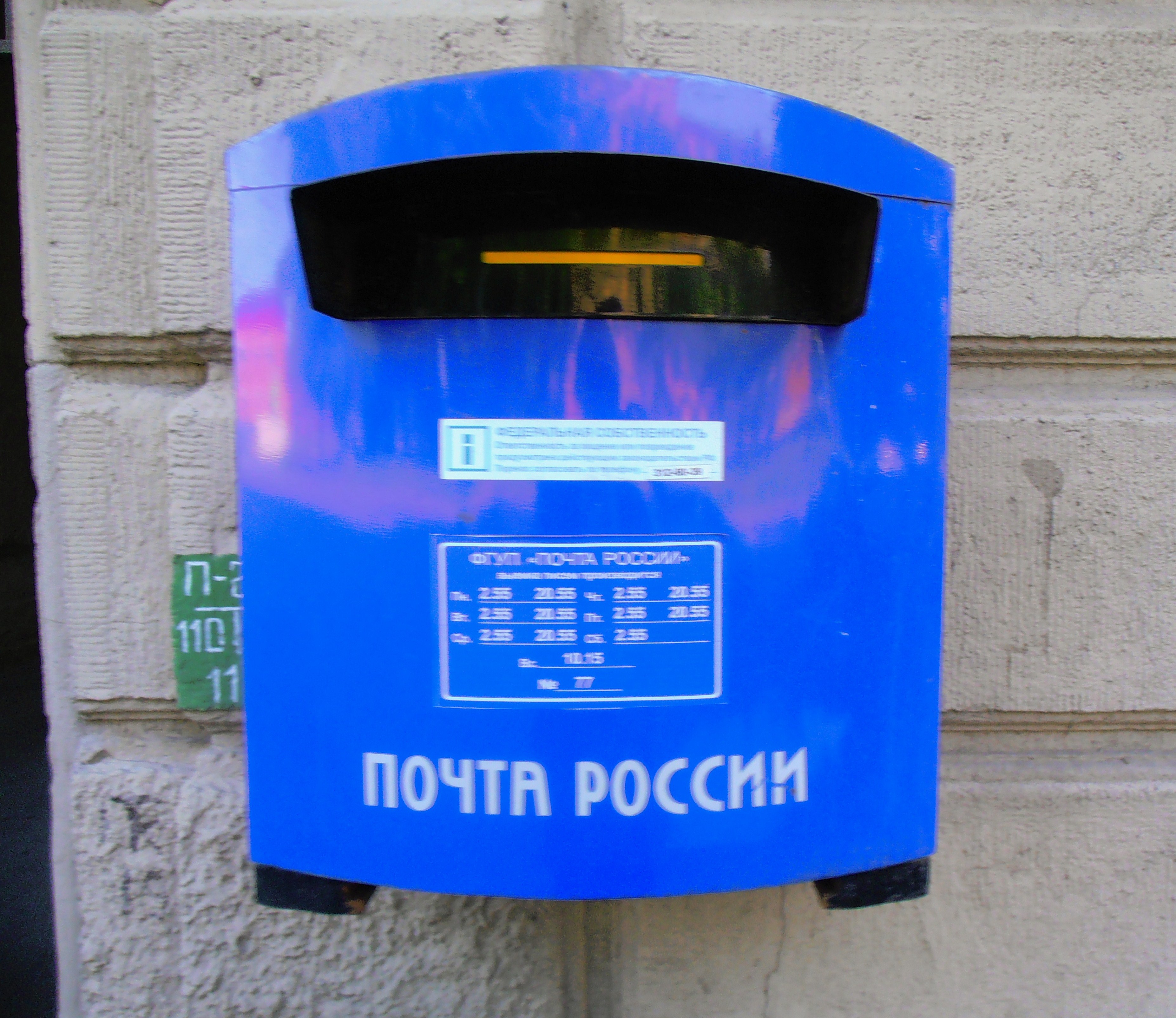
Bothering to Mail Postcards.   We have email, and cell phones.  Some of us have Skype, and most of us have blogs.  You can now send “digital postcards” from a variety of websites.  So why do I find myself in line with many other befuddled tourists in  a foreign post office as we try to figure out how much it costs to send where, and how?  Apparently I’m not the only one who has a sentimental thing for a mass-produced piece of cardstock with barely enough room to describe what I did for the day, much less how I feel about it.  But I know that card is going to mean the world to a parent or grandparent who can’t find the power button on a computer, much less remember to be by their phone at midnight Central European Summer Time (CEST) when I try to call.

Yes, it’s often a royal pain to figure out the local version of the Royal Mail.  For example,  I’ve asked three different Correo attendees in Buenos Aires how much it costs to mail a card to the U.S., and gotten three different answers.  I’ve heard of people wasting a good afternoon of touring trying to track down the DHL service in Moscow only to end up at the rather inefficient and expensive local post office.  And I’ve had my share of beautifully-written postcards simply never make it to their recipients.  To be honest,  I have mail postcards on my to-do list for every city right under look up local embassy and do laundry.  Yes, it can be a chore, and a source of possible stress.  Some things on a trip just are.  But most of the time we find them to be well worth it.

OLYMPUS DIGITAL CAMERA

Ever been late to a nice tourist attraction while you fretted over whether the postcard that fits into the little box would actually make its way across the ocean?  

Can Smartphone Applications Take the Worry Out of Touring?

…or the fun?  And the discovery?

Imagine standing in a foreign street and holding a smartphone out at arm’s length, and having the names and uses of each building in front of you pop up on the screen — along with info about the nearest metro station, store business hours, and more.  Sound impressive?  This type of application is actually pretty common these days.  It uses a technology called augmented reality (AR), which is a live view of your real-world environment, captured on a screen and narrated by computer-generated input (usually text, but also graphics, sound and GPS data).  It can be invaluable if you’re touring where you can’t make heads or tails of the language, or if you have a hopeless sense of direction.  In other words, it can help you avoid getting lost, misunderstood, taken advantage of, and other very stressful situations.

So what’s involved in an AR device?  The hardware usually consists of a processor, a display, and sensors (all three of which are rolled into one unit and shaped to fit your hand) and the output device (usually a headset, which may not be necessary depending on how easy your display is to use).  Standalone units were common at first, but more and more, smartphones and tablets have the camera, sensor, and output needed to support AR.  Right now, the application (including all the required software) averages about $400, and can be worth every penny.  Consider the following it can help you with:

  • ŸIdentifying the full route of a bus you see down the street;
  • ŸPotential hazards in your path (such as poorly marked construction);
  • ŸRoad conditions and traffic updates (if you are driving); and last but not least,
  • ŸTranslating foreign text on signs and menus.

So why isn’t everyone walking around with one on tour?  Well, there are some definite drawbacks to using AR.  Some that I can think of include:

  • Dangerous levels of immersion.  You can get so absorbed in the interface that you become oblivious to your surroundings.  AR will tell you a lot, but not about the bad habits of drivers or the motivations of the people around you.
  • ŸYou can become dependent on AR.  It can erode your observational skills, your intuition, and your problem-solving skills.  Consider the possible effect on your confidence, and your ability to guide others someday (like your kids!).
  • ŸThe application can take some of the discovery and personal experience out of your trip.  If part of your touring enjoyment comes from figuring out whether you’ve just stumbled upon a great tattoo parlor or just a music store, or whether an odd building is a museum or an antiques shop, then think about saving AR for occasional use, when you’re really stuck — or just opting to travel the “traditional way,” with a map in your hand instead.

Image

Can’t imagine where this escalator-in-a-forest leads to?  Me neither, but to be honest, I’d rather just keep walking to find out.

Does Jet Lag Impact Your Stress Level?

I’ve asked a lot of travelers this question, and consistently noted that about half of people say yes, and about half say no. Jet lag is one of those things international travelers inevitably have to manage, and something that we either learn to put up with, ignore, or (at the very least) use as a good explanation for our coworkers, family, and friends after we get back from a trip and feel like we’re stumbling through a fourth dimension for a week.

Interestingly, those who admit that jet lag causes them quite a bit of anxiety discover that it’s actually worrying about jet lag that causes them the most stress (how will it affect them physically?  Mentally?  Emotionally?) while those that say jet lag doesn’t bother them often say that while jet lag is irritating, it relaxes them in a certain way — unlike any other physiological phenomenon.   These are people who actually don’t mind having their natural body rhythms thrown off because it is a break from their daily rut of work-eat-sleep-worry-work-eat-sleep-rinse-and-repeat.   In other words, jet lag is just a feature of being on vacation, of doing something different.

Given the varying reactions and all the anecdotes and quick-fix recommendations that abound out there on how to deal with jet lag, it’s worth taking a closer look.

Jet lag results from alterations to the body’s circadian rhythms caused by trans-meridian (west–east, or east-west) air travel.  When traveling across a number of time zones, your body’s natural pattern is upset as the cycles that govern times for sleeping, eating, and body temperature regulation no longer correspond to your environment.  To the extent that your body cannot immediately realign these rhythms, you are “jet lagged.”  Symptoms can either aggravate anxiety, or be mistaken for intensified side effects of medications.  Some of the most common jet lag symptoms include:

  • Ÿ         Headache and irritability;
  • Ÿ         Balance and coordination problems;
  • Ÿ         Difficulty concentrating;
  • Ÿ         Early awakening (if flying west) or trouble falling asleep (if flying east); and
  • Ÿ         Interrupted sleep (to say the least).

Jet lag usually occurs with a change of three time zones or more, and the extent to which you’re affected depends on the number of time zones crossed.  If you’re unfamiliar with jet lag (or just want to explain it as painlessly as possible to your great-aunt), it’s worth noting that the maximum possible disruption is plus or minus twelve hours.  If the time difference between two locations is greater than twelve hours, subtract that number from 24 to understand the “adjusted” time zone difference.  New Zealand, for example, being nineteen hours ahead of Pacific Standard Time, would pose only a five-hour jet lag challenge to a traveler from California.

The recovery time for jet leg is generally one day per time zone crossed, although many people (particularly those who travel more) are able to recover faster.  Women are affected by jet lag more than men, since normal nighttime and daytime body rhythms are connected to estrogen levels.  Recovery will also depend on whether your flight(s) are overnight or scheduled during the day.  You’ll typically experience more jet lag if you begin a long flight mid-morning or early afternoon than if you take a “red eye” flight departing at eight p.m. or later (it helps, of course, if you can actually fall asleep on an airplane).

Unfortunately, there are no proven ways to avoid jet lag altogether.  You can talk to your general care practitioner about where specifically you’re going, and how to strategize flight times and sleep hours, to try to minimize the impacts.  Your doctor may suggest getting only a minimal amount of sleep the night before your flight (so that you’re naturally sleepy when you arrive at your destination) or taking a prescription-strength sleep medication for the first several nights of your trip.

OLYMPUS DIGITAL CAMERA

How will you feel after making this trip?!