Are You a Dromomaniac? — The Ten Most Common Manias that Affect Travelers

Are you a dromomaniac (insatiable traveler)?  Of course you are — if you weren’t a xenomaniac (inquisitive folk obsessed with foreign things and places) you wouldn’t be reading this.  You’ve come to the right travel blog to find out if you’re a opsomaniac, sophomaniac, or oniomaniac when you go abroad — and how to recognize when your obsession will no longer fit under your seat or in the overhead compartment.  Hold on tight to your passport and put in the back of your head what your mother or spiritual guru told you about doing “everything in moderation.”  The real question is, how come our travel agents (or at least Travelocity’s Roaming Gnome) didn’t warn us about the top ten travel manias that can make us feel like out-and-out maniamaniacs?*

1. Ecdemomania: chronic and uncontrollable urge to wander.  It’s not enough that you indulge your travel lust to come to a place thousands of miles away; once you’re there, you can’t even sit still at your hotel, stay with your tour group, or resist following strangely-dressed locals down narrow alleyways.

2. Epomania: obsession with writing epics.  Becomes apparent when 1) your travel blog posts reach 5,000 words each, 2) you’re starting to get data storage warnings from WordPress, or 3) one of your followers discreetly suggests that just because you’re on vacation, they don’t have all the time in the world to read every blow-by-blow.

3. Oniomania: insatiable desire to shop. Rears its ugly head after you’ve swam, boogied, eaten, boozed, and tangoed your way across your charming but claustrophobic resort town, and have nothin’ else left to try.

4. Phagomania: excessive desire for food or eating. Becomes obvious when you’re 1) dining out twice in the same evening, 2) are buying more Immodium AD than Dramamine at that skanky pharmacy down from your hotel, or 3) need to work off your oniomania at the nearest clothing store since nothing you brought with you on the trip quite fits anymore.

5. Sophomania: gluttonous belief in one’s own incredible intelligence.  At its most obvious after you’ve figured out (all in the same day) how to operate an eco-toilet, hundred-year-old elevator, Azerbaijan-made bathtub faucet, and ATM machine that you would never, ever find at home.

6. Doromania: obsession with giving or buying gifts.  Crops up towards the end of your trip after you’ve spent two paychecks on things for yourself, and have one Athenian shopping street, two Turkish bazaars, and three very long airport terminals to wander through before the signature on the back of your credit card actually starts to wear off.

7. Opsomania: obsession with one kind of food.  Develops after feasting on the beloved culinary specialty of your host country for lunch and dinner every single day — especially after you remember that the most exotic thing you’re going to find to eat back home is an enchilada.

8. Islomania: fixation on islands.  Becomes more obvious after you’ve gallivanted through New Zealand, Tahiti, Hawaii, and Japan, and have your restless eye now set on The Philippines, Sicily, Iceland, or Fiji.

9. Verbomania: fixation with words. Becomes apparent when, after failing to learn a single syllable of the local language, you  scrounge for five adjectives of the same English word in the hopes that your provincial B&B host will understand one of them.

Unfortunately, there’s no diagnostic term for 10. shutterbugomania, an obsession with taking  pictures.  But, if you can identify where this photo of all the photos was taken, you’ll win a FREE copy of The Anxious Traveler.
OLYMPUS DIGITAL CAMERA

*Important note: this post is intended to offer some lighthearted fun following the tension and stress that most travelers suffer this time of year because of the 9/11 anniversary.  It’s not intended to diminish the seriousness of any mania that is interfering with your life, or the impact of bipolar disorder on mental health.  If you believe you are suffering from manic depression/bipolar disorder, you should consult a doctor.

The Top 12 Travel Phobias You May Very Well Have, and Didn’t Even Realize!

Well, summer’s over.  Got post-vacation depression?  Are you broke and tired?  Does the sound of falling leaves remind you of the sweet swish of your passport pages turning?  Now’s the time to lighten up, do some soul-searching, and take a really close look at some of the fears you may have sadly developed over the course of your recent international escapades.

Sure, you may know you have aviatophobia (fear of flying), claustrophobia (fear of enclosed spaces), xenophobia (fear of strangers), and mysophobia (fear of germs); those are all pretty common and boring.  What about all those other angst-inducing scenarios and situations that crop up as often as ridiculously cheap fares on Orbitz?  They’ve probably given you a tic or two, whether you want to admit it or not.  Let’s look at twelve real, honest-to-God, official phobias identified by scientists, psychologists, and very renowned researchers (probably ones that don’t do much traveling) that can develop when you’re vagabonding the globe.  You’ll find that they’re really nothing to laugh about!

12. Nomophobia: fear of being out of mobile phone contact.  Develops after you 1) find yourself repeatedly lost, late, drunk, or confused; 2) have once again left your cruise partner behind at the last shore excursion; or 3) are waiting to hear back from MasterCard about doubling your credit card limit now that you’re on vacation.

11. Agyrophobia: fear of crossing the road.  Of particular prominence in India, Brazil, Belarus, Azerbaijan, and other places where smiling drivers drive a perfect 40 mph in the 40 km/hr zone, use their horn only in emergencies, and wave you across the pedestrian crosswalk with all five fingers.

10. Autophobia: fear of being alone or isolated.  Develops after repeatedly encountering closed currency exchange counters, boarded-up travel info help desks, and hotel rooftop access doors that automatically lock from the inside.

9. Pedophobia: fear/dislike of children.  Of particular concern when 1) taking your middle seat on a 12-hour flight next to a screamer, across from a babbler, and behind a squealer, or 2) realizing that the average age of the other guests at your “family friendly” hotel is about ten years old.

8. Emetophobia: fear of vomiting.  At its most intense when, once again, you strike up a conversation with the beautiful person next to you after you’ve consumed vodka during turbulence.

7. Decidophobia: fear of making decisions. At its worst when your new, drunken travel partner is relying on you to find the safest way back to the hostel at 2 am, and you have no more Euros.

6. Ipovlopsychophobia: fear of having one’s photograph taken.  This is for you, ladies.  Symptoms occur after 1) the airline once again leaves behind your checked bag containing your makeup tote, 2) you’ve finally noticed the hotel security cameras, or 3) you realize your father is following your boyfriend’s blog.

5. Halitophobia: fear of bad breath.  At its most wretched when exceeding the standing room capacity of buses;  in Rome, in August, during a heat wave; and when having to make an emergency trip to a dentist in the Middle East.

4. Sesquipedalophobia: fear of long words.  Particularly prominent when trying to read the menu at a tourist-unfriendly exotic little restaurant you’re dining at with an attractive local you just picked up.

3. Disposophobia: fear of getting rid of or losing things.  Severe symptoms occur after you’ve been pickpocketed, mugged, and had a bad experience with a bellhop all on the same trip.

2. Chronophobia: fear of time and time moving forward.  Of particular concern when you start receiving airline departure check-in reminders, your coworkers start calling you, and/or you can’t even remember the beginning of your trip.

and the number one under-recognized travel phobia is …
1. Phobophobia: fear of having a phobia or fear.  Because the last thing you want to find out when you’re trying to have yourself a *$#&% good time somewhere is that you have yet another new hang-up!

Honorable mention phobia:  Ophthalmophobia (fear of being stared at, especially when you’re just trying to make sense of the local culture)

OLYMPUS DIGITAL CAMERA

Moving on: How to Leave a Place Without Stress

According to Buddhism, the root of all suffering is attachment – wisdom you may certainly understand when it’s time to leave your travel destination.  Considering that a certain beach, park, hotel, or other favorite locale existed only in your imagination weeks before, your connection to a place and reluctance to leave can be intense.  Managing these feelings is important since you don’t want them to overcome the joy of having seen them in the first place – or as the pessimistic traveler laments, Why come if I only have to leave? 

It’s not uncommon to get downright morose when you have to wind down an incredible vacation at a place you’ve fallen in love with.  The following thoughts might go through your mind:

  • Ÿ         Will I ever come here again?
  • Ÿ         What will happen here after I leave?
  • Ÿ         How will this place change without me?  Can it be “mine?”
  • Ÿ         Does it matter that I ever came here?

These feelings and doubts can resemble separation anxiety.  How significant this anxiety is depends on

  1. how much of an emotional connection you’ve made to a place, and
  2. how difficult it is to physically make your way back to it.

The answers to those two questions can vary widely, but here are some general recommendations for moving on without trauma.

Leave a piece of yourself.  More tourists than would care to admit leave a part of themselves behind at a place they love – anything from a strand of hair to engravings on a tree, to things that border on defacement or ecological damage.  An environmentally friendly way to leave your mark is to pen your name and the date on a small, loose rock and put it back where it was on a trail or thoroughfare.

Take a piece with you.  There’s a reason that the souvenir industry is valued at billions of dollars; people want a symbol or a token of their experience somewhere, even if their only “connection” with it was at a local club.  If you don’t care for either synthetic, mass-produced trinkets or museum-type expensive souvenirs, then take a piece of a place, literally: some stones, shells, a feather, or a piece of wood or bark.  Holding these items long after you’ve left can put you back in the moment of your tremendous experience.

Keep a travel log.  No, not your blog, but something more personal, something only for you.  A travel log doesn’t have to take the form of a written journal; depending on how much you (don’t) like to write, you can tape- or video-record your experiences and impressions.  Another option is to keep a notebook, but only record the facts, events, and people you encountered each day.  Your memory will fill in the rest of the details as you mentally journey back later on.

You can also draw on a map where you went, with brief notes at each street or block that will remind you of something special; or pick a new piece of music to play while you are enjoying the place, that will always remind you of where you were when you first heard it.

Virtual visits.  If your time at a place is too limited for you to manage a travel log, note that there are thousands of YouTube internet videos featuring beloved travel sites, and they are viewable by anyone.  Some of them are amazingly done and might even showcase something you never noticed about a place.  Although it’s not going to be as special or personalized as something you put together, knowing you can make a “virtual visit” can help you move on.

Plan to return.  Promise yourself to come back to the place.  If you’ve come once, you can come again, and most incredible sites don’t just get up and leave.  They can evolve, however, so keep abreast of the place by going to its webpage.  If you find out that it’s destined to change (and not necessarily to your liking), time an upcoming visit to enjoy it one more time as you remembered it.

OLYMPUS DIGITAL CAMERAIt’s time to leave.  Can I just take this whole beach home with me?

You Did WHAT on Your Trip?! Travel, Adrenaline, and Taking Risks: The Connection

Have you ever sat next to someone like this on the plane ride home from your vacation?:

  • A 45-year old woman with a bulging disc in her spine who felt so fantastic in Auckland that she went bungy jumping… then wondered why she couldn’t walk the next morning
  • A bipolar, alcoholic Swede who blew his entire food budget to take a helicopter ride over a volcano blowing near Reykjavik
  • A guy arrested for slipping into St. Basil’s Cathedral for his own “private tour.”  Twice.
  • A 25-year-old woman from Australia who decided to learn how to drive on the right…  on the Autobahn

Do these things sound crazy, stupid, reckless, and just plain thrilling?  Before you answer, think about some of the things you’ve done on a trip that have made you, well, question your better judgment.   I’ll even leave room for you to mentally write them out:

____________________________________________________________________________________________
(yeah…)

____________________________________________________________________________________________
(but)

____________________________________________________________________________________________
(it was)

____________________________________________________________________________________________
(SO)

____________________________________________________________________________________________
(exciting)

Are you smiling, or grimacing?  Well, it probably depends on how your adventure turned out.  You may want to roll your head in your hands and say, what was I thinking? Or you may want to say: Hell, yeah.  What happened in _______ stays in _______.  And you know: you’d never pull such a “stunt” at home.

We do different things in a new and different environment; that’s one reason travel makes us feel so good, makes us feel so alive again.  We see something we like, and we do it.  It‘s quite often as simple as that.  The future doesn’t enter much into our minds.  We haven’t had time to obsess over the consequences.  And the same often holds true whether you are a natural daredevil — or a hesitant, and even anxious person.

It’s in the latter case that the effects of travel-inspired risk-taking can rear their ugly head.  Many sensitive, cautious individuals have low tolerances for stress, or — to put it more eloquently — for “shit happening.”  The violate their personal limits more easily; they raise the stakes on their psychological well-being.   If things work out, they feel euphoric.  If their risk ends up in minor (or major) disaster, they can feel terrified and regretful.

All four of my plane mates briefly described above — Terri, Edvard, Josh, and Amy — are what I’d describe as hesitant, cautious people.  Maybe even worrywarts.  Certainly, people who view the glass as half-full only as long as things are going “as they should.”   And yet they did what they did.  I could tell that each of them would spend a lot of time thinking about their thrill-seeking quests.  They would probably have some psychological scars.  They were amazed — and scared — over what a short memory they’d had when they decided to seize the moment.  Their own tunnel vision both frightened them and inspired them.  And finally, I got the sense that most of them were going to become bold wanderlusts; maybe even minor adrenaline junkies.  (Amy is still fighting with her car insurance company.)

So what happens for you when you cross the line from adventurous to risk-taker? Do you feel thrilled, or just plain reckless?  Many times, that extra shot of adrenaline helps you do something that you never thought you could pull off.    There’s a big long definition for adrenaline, but I have a simple description: it’s that stir of now setting both your mind and body free.

Some of the happiest travelers I’ve met live like they’re not planning to come back home from their vacation.  That might not be you — or it may be you to a lesser degree.  Either way, we get a high off that first impulse, that first sense of possibility.  It keeps us traveling; it keeps us moving forward.  It keeps us thrilled.

OLYMPUS DIGITAL CAMERA  Wow, that looks great!  And this whiplash of mine is, like, almost totally healed

Has 9/11 Become the Safest Day of the Year to Travel?

Quite possibly.  Very possibly.  And why, you ask?  Are you kidding?

Have you been to a major American or other Western airport on 9/11?  The lines are shorter, but the screenings take longer, because they’re more thorough.  There are fewer distractions.  The music blaring from Duty-Free is turned down a bit; there isn’t the same raucous chatter from tour groups and families about to depart.  Everyone is watching everyone else.

The pilots and flight attendants are more vigilant.  Passengers don’t leave bags unattended for five seconds (much less a couple minutes) to recheck their boarding time on the screen.  There’s a subtle, but depressing and deadened hush from gate to gate, from terminal to terminal.  Planes are triple-checked instead of double-checked.  Air traffic controllers watch every move on their monitors and across the sky as if their lives depended on it.

Which to me, at least, all suggests that 9/11 may in fact be the safest day of the entire year to get on an airplane — at least in the West, and at any number of other areas scarred by a  terror attack.

But would you care to fly on 9/11?  My guess is no.

As we approach the 12th anniversary of 9/11, it’s worth taking a brief look at what’s happened at airports and on airplanes, both in terms of safety and security.  Besides a couple of terrifying near-misses involving a shoe bomb and liquid gels, there hasn’t been a major incident or threat.  Newer security measures (which are now years old) border on knee-jerk reactions  (no one had to remove their shoes before Richard Reid’s threat; no one had a problem with our jug of water until the scare with the bottles of chemicals onboard).

It’s impossible to say if terrorists want an encore of  a certain tragedy to drive their message home.  From what I’ve observed, they usually move on to some other tactic once they’re successful at a particular “mission.”  Take the World Trade Center, for example: after some unsuccessful tries to bring it down, the jihadists accomplished their “mission” and moved on to… well, a variety of other things.  Embassies will always remain vulnerable targets.  Car bombings are smaller-scale, but accomplish the same basic “goal.”

To me, the people that seem most scared — and maybe rightfully so — are the ones with the Eurail or Amtrak passes.  I need to glance through my own travel anxiety book every time I get on a train now.  Of course I’m scared.  Isn’t everyone?

Will I be flying on 9/11 this year?  No, because it’s still a little too hot in Turkey during the first half of September.  I’ve given myself a good reason (excuse?) to fly on the less auspicious date of 9/26 instead.

Will you be flying on 9/11 this year?  Maybe not, since it’s coming up fast, you might have other plans, and it still holds that sickening power of imagination and dread over us.  But would you consider doing so in the future?  You might.  From my look around during the last 9/11, it seems about as safe as you can get, and your courage — and indifference to the date — flies right in the face of what every jihadist most wants.

OLYMPUS DIGITAL CAMERA

It’s 9/11.  Am I all alone in here?

Those Little Things that Cause Us Stress on a Trip… that We Keep Doing

…usually to make someone else feel more comfortable, or happy, even though it’s our vacation, and we might very well be in self-gratification overdrive… and if not, then our minds are already full of plans and distractions, addresses and schedules.  Sound familiar?  Even if you consider yourself a “tunnel-vision traveler,” the kind that has their nose to the itinerary and way more interest in the sights around them than the people, you might find yourself spending more energy than you planned in order to make things easier or nicer for someone else.  Personally, I never cease to be amazed by fellow tourists who struggle against their own impatience, social anxiety, discomfort, or pride in the name of kindness or sensitivity to those around them (or waiting for them at home).  Here are some observations of how we often make things a little harder for ourselves abroad… and usually don’t feel bad about it.

Speaking the Local Language When You Know the Other Person Speaks Good English.  Sometimes even perfect English.  But not necessarily comfortable English.  What’s the big deal?  you ask.   Can’t the thousands of underpaid and overworked hotel receptionists at all the Americanized hotels out there just help us in our own language so we don’t have to choke on a few recitations out of a Lonely Planet phrasebook?  Of course.  But does it sometimes irritate or tire them out?  Yes, they’ve told me when I’ve actually asked.  Personally, I’ve been amazed at how exhausted and disconnected I can feel from my own thoughts and feelings when I have to navigate back and forth all day between two languages.  For some of us it’s natural; for others, it’s a major brain-drain, and can make a person feel downright lonely.  If I see a depressed Parisian hotel manager hang up the phone after clearly losing an argument in English, I’m going to do my best to converse with him in my rudimentary French.  Yes, it stresses me out.  But it helps him regain his confidence and frame of mind.

Smiling at Service People. Should we smile at the maid for cleaning our room?  Will she think it’s condescending?  Should we smile at the TSA security guy who looks like he’s ready to drop from exhaustion?  Will he think I’m trying to distract him?  Should I smile at the Muslim couple running a convenience store in East London, who just helped me pick up all my spilled groceries off the floor (what’s to smile about? Will the man think I’m being too forward?) or should I nod and get the heck out of their way?  Well, often we’re not sure… especially if we’re in a drastically different cultural setting.

Am I alone in getting pretty nervous over little things like this?  Probably not.  It’s taken me awhile to realize that even if someone doesn’t smile back, it doesn’t usually mean they dislike your nice expression.  They’re just too taken aback or tired to smile back.

Offering to Take Someone’s Photo Have you ever actually said no to someone who asked you to take a photo of them in front of a landmark?  Maybe if you had a baby in your arms, or were in a mad hurry.   I know I feel a little bad for the oddball solo male or female traveler standing in the grass in front of the Eiffel Tower trying repeatedly to center themselves in front of their own camera… which is why I stop and offer to take their picture.  I’m always worried it will result in an awkward conversation, or the person will follow me asking me to take another photo, or that (worse) I’ll do something and actually break their camera… but it never does.  And it actually causes me less stress to offer a photo than see someone ten feet away obviously trying to work up the nerve to ask me.   Afterwards I’ll think, what was the big deal?… and then some 80-year-old guy from Alabama will nab me near the Louvre and want me to help him buy a metro ticket.

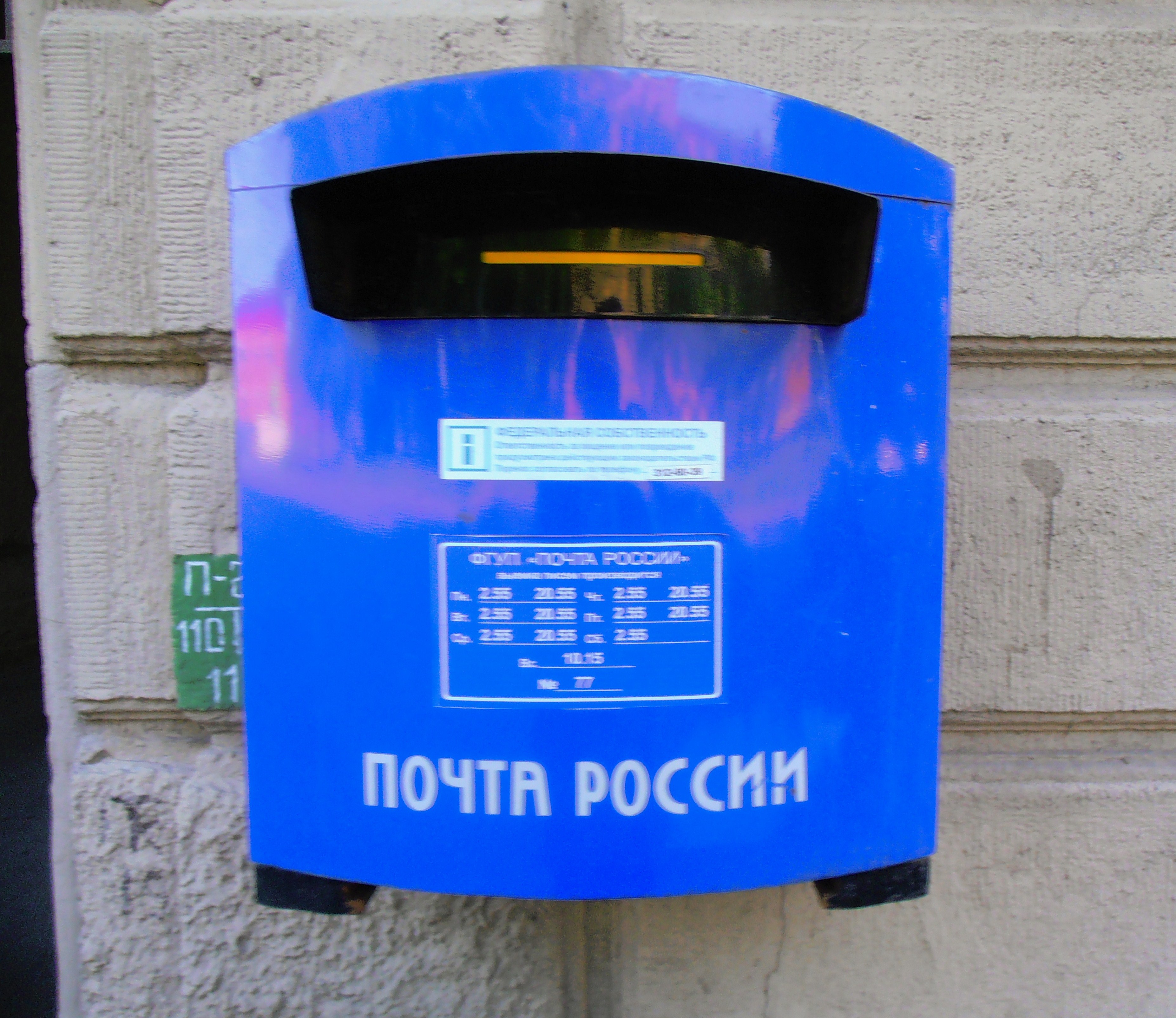
Bothering to Mail Postcards.   We have email, and cell phones.  Some of us have Skype, and most of us have blogs.  You can now send “digital postcards” from a variety of websites.  So why do I find myself in line with many other befuddled tourists in  a foreign post office as we try to figure out how much it costs to send where, and how?  Apparently I’m not the only one who has a sentimental thing for a mass-produced piece of cardstock with barely enough room to describe what I did for the day, much less how I feel about it.  But I know that card is going to mean the world to a parent or grandparent who can’t find the power button on a computer, much less remember to be by their phone at midnight Central European Summer Time (CEST) when I try to call.

Yes, it’s often a royal pain to figure out the local version of the Royal Mail.  For example,  I’ve asked three different Correo attendees in Buenos Aires how much it costs to mail a card to the U.S., and gotten three different answers.  I’ve heard of people wasting a good afternoon of touring trying to track down the DHL service in Moscow only to end up at the rather inefficient and expensive local post office.  And I’ve had my share of beautifully-written postcards simply never make it to their recipients.  To be honest,  I have mail postcards on my to-do list for every city right under look up local embassy and do laundry.  Yes, it can be a chore, and a source of possible stress.  Some things on a trip just are.  But most of the time we find them to be well worth it.

OLYMPUS DIGITAL CAMERA

Ever been late to a nice tourist attraction while you fretted over whether the postcard that fits into the little box would actually make its way across the ocean?  

Travel, Terror, Strategy, and Luck

It’s August.  I don’t need to know it’s high-travel season; I read your blog entries written from around the world every day.  If you’re not on a trip right now, then you just got back from somewhere, or you’re ready to go abroad, or you’re thinking  about it.  This is the time of year when many of us most want and need a vacation.  Summer is running out; students go back to school soon; the dreary months of the year seem depressingly near.  Many of us wait until August to take our summer vacation because we had too much to do at home in June and July.  We’re relieved to finally, finally be on our way.  Then the State Department issues a travel alert… for the entire month of August.  Do they call it a terror alert?  No, they call it a travel alert.  That makes us feel so much better, right?  And yet do we sit on our passports and let the doubt and fear creep into our minds?  From what I can tell, the answer is definitely no.

The anticipated targets are just vague enough, and just specific enough, to be infuriating.  The embassies are closed across the Middle East and North Africa.  But I’m not in the Middle East, you answer.  Should I stay the heck away from the embassies in all the most popular European capitals because they might be threatened too?  Well, we don’t know.  It would be a “good idea.” It might be a good idea, too, if you weren’t on top of the Eiffel Tower at 3 pm on a beautiful afternoon.  Or aboard The Eye in London the next evening.  Or somewhere else insanely popular at an insanely popular time.  The point is, there are lots of ways to minimize that thing we call personal risk.  Personal risk is about reducing the chance that you’ll be in the wrong place at the wrong time.  And what does it really add up to?  Does something either happen or not, and we’re along for the ride either way?

 The questions really is, does a travel alert actually change our behavior?  I’ve talked to tourists who won’t take a direct flight across the United States because they believe there will be a repeat of the 9/11 attacks.  They will lay over in Toronto on a flight from Los Angeles to Washington, D.C., and then tell me how much safer they feel when they land.  I’ve talked to other people who won’t stay in any kind of large chain hotel overseas because they think that an independent or locally-owned hotel won’t be targeted.  I’ve been on board a flight from Paris to London that was running three hours late, and the people next to me didn’t complain once because they would rather sit on the tarmac all night rather than deal with the stress of riding through the oft-threatened Chunnel.

Personally, the travel alert isn’t going to change my plans to fly into Istanbul next month.  The fact that Turkey isn’t on the Middle East and North African “danger list” hasn’t inspired me to keep my plans.  I just don’t think anything’s going to happen to me.  I trust my instincts, my common sense.  I trust in my vigilance to notice my surroundings, to know when something’s “wrong,” and to be a small part of preventing a tragedy.  Is this arrogant?  Yes, I think so.  It distracts me from the idea that I believe in my own luck to save me from a serious incident abroad.  Am I alone in believing this?  No, I don’t think so.

Most of us will use the travel alert to reduce our personal risk.  We might choose to travel “smaller,” travel more quietly.  We’ll travel “smarter,” whatever that means, and keep an eye out.  The more cautious among us will stay the hell out of and off “popular” destinations and routes, and go to bed thinking about how there’s no strategy for luck.  The more brazen among us will feel more relaxed and invigorated after 2,000 miles on a Eurail pass without seeing a single nervous-looking security guard.  That’s 2,000 more miles without incident… ha!  And we’ll keep going, and going, and going.

If nothing happens this month, then we’ll all feel lucky, and we’ll love traveling (and in one sentimental figurative embrace, the world) even more than we do now.  If something does happen, then we’ll rage over it, we’ll adjust, we’ll wait, and head right back out.  With a more watchful eye this time.

OLYMPUS DIGITAL CAMERA

When I was in Russia in late June, I didn’t say anything to anyone about the two unattended bags below the Olympic countdown clock.  Now, I would.  Would it make me feel any safer?

Can Smartphone Applications Take the Worry Out of Touring?

…or the fun?  And the discovery?

Imagine standing in a foreign street and holding a smartphone out at arm’s length, and having the names and uses of each building in front of you pop up on the screen — along with info about the nearest metro station, store business hours, and more.  Sound impressive?  This type of application is actually pretty common these days.  It uses a technology called augmented reality (AR), which is a live view of your real-world environment, captured on a screen and narrated by computer-generated input (usually text, but also graphics, sound and GPS data).  It can be invaluable if you’re touring where you can’t make heads or tails of the language, or if you have a hopeless sense of direction.  In other words, it can help you avoid getting lost, misunderstood, taken advantage of, and other very stressful situations.

So what’s involved in an AR device?  The hardware usually consists of a processor, a display, and sensors (all three of which are rolled into one unit and shaped to fit your hand) and the output device (usually a headset, which may not be necessary depending on how easy your display is to use).  Standalone units were common at first, but more and more, smartphones and tablets have the camera, sensor, and output needed to support AR.  Right now, the application (including all the required software) averages about $400, and can be worth every penny.  Consider the following it can help you with:

  • ŸIdentifying the full route of a bus you see down the street;
  • ŸPotential hazards in your path (such as poorly marked construction);
  • ŸRoad conditions and traffic updates (if you are driving); and last but not least,
  • ŸTranslating foreign text on signs and menus.

So why isn’t everyone walking around with one on tour?  Well, there are some definite drawbacks to using AR.  Some that I can think of include:

  • Dangerous levels of immersion.  You can get so absorbed in the interface that you become oblivious to your surroundings.  AR will tell you a lot, but not about the bad habits of drivers or the motivations of the people around you.
  • ŸYou can become dependent on AR.  It can erode your observational skills, your intuition, and your problem-solving skills.  Consider the possible effect on your confidence, and your ability to guide others someday (like your kids!).
  • ŸThe application can take some of the discovery and personal experience out of your trip.  If part of your touring enjoyment comes from figuring out whether you’ve just stumbled upon a great tattoo parlor or just a music store, or whether an odd building is a museum or an antiques shop, then think about saving AR for occasional use, when you’re really stuck — or just opting to travel the “traditional way,” with a map in your hand instead.

Image

Can’t imagine where this escalator-in-a-forest leads to?  Me neither, but to be honest, I’d rather just keep walking to find out.

Does Jet Lag Impact Your Stress Level?

I’ve asked a lot of travelers this question, and consistently noted that about half of people say yes, and about half say no. Jet lag is one of those things international travelers inevitably have to manage, and something that we either learn to put up with, ignore, or (at the very least) use as a good explanation for our coworkers, family, and friends after we get back from a trip and feel like we’re stumbling through a fourth dimension for a week.

Interestingly, those who admit that jet lag causes them quite a bit of anxiety discover that it’s actually worrying about jet lag that causes them the most stress (how will it affect them physically?  Mentally?  Emotionally?) while those that say jet lag doesn’t bother them often say that while jet lag is irritating, it relaxes them in a certain way — unlike any other physiological phenomenon.   These are people who actually don’t mind having their natural body rhythms thrown off because it is a break from their daily rut of work-eat-sleep-worry-work-eat-sleep-rinse-and-repeat.   In other words, jet lag is just a feature of being on vacation, of doing something different.

Given the varying reactions and all the anecdotes and quick-fix recommendations that abound out there on how to deal with jet lag, it’s worth taking a closer look.

Jet lag results from alterations to the body’s circadian rhythms caused by trans-meridian (west–east, or east-west) air travel.  When traveling across a number of time zones, your body’s natural pattern is upset as the cycles that govern times for sleeping, eating, and body temperature regulation no longer correspond to your environment.  To the extent that your body cannot immediately realign these rhythms, you are “jet lagged.”  Symptoms can either aggravate anxiety, or be mistaken for intensified side effects of medications.  Some of the most common jet lag symptoms include:

  • Ÿ         Headache and irritability;
  • Ÿ         Balance and coordination problems;
  • Ÿ         Difficulty concentrating;
  • Ÿ         Early awakening (if flying west) or trouble falling asleep (if flying east); and
  • Ÿ         Interrupted sleep (to say the least).

Jet lag usually occurs with a change of three time zones or more, and the extent to which you’re affected depends on the number of time zones crossed.  If you’re unfamiliar with jet lag (or just want to explain it as painlessly as possible to your great-aunt), it’s worth noting that the maximum possible disruption is plus or minus twelve hours.  If the time difference between two locations is greater than twelve hours, subtract that number from 24 to understand the “adjusted” time zone difference.  New Zealand, for example, being nineteen hours ahead of Pacific Standard Time, would pose only a five-hour jet lag challenge to a traveler from California.

The recovery time for jet leg is generally one day per time zone crossed, although many people (particularly those who travel more) are able to recover faster.  Women are affected by jet lag more than men, since normal nighttime and daytime body rhythms are connected to estrogen levels.  Recovery will also depend on whether your flight(s) are overnight or scheduled during the day.  You’ll typically experience more jet lag if you begin a long flight mid-morning or early afternoon than if you take a “red eye” flight departing at eight p.m. or later (it helps, of course, if you can actually fall asleep on an airplane).

Unfortunately, there are no proven ways to avoid jet lag altogether.  You can talk to your general care practitioner about where specifically you’re going, and how to strategize flight times and sleep hours, to try to minimize the impacts.  Your doctor may suggest getting only a minimal amount of sleep the night before your flight (so that you’re naturally sleepy when you arrive at your destination) or taking a prescription-strength sleep medication for the first several nights of your trip.

OLYMPUS DIGITAL CAMERA

How will you feel after making this trip?!

Plane Crash… Train Crash… is Your Travel Anxiety in Overdrive Yet??

Yes, there have been two major travel catastrophes in the news this summer: the Asiana Airlines plane crash at San Francisco International, and now the horrific Renfe train crash in Santiago de Compostela, Spain.  Neither incident allowed the passengers on board to see or prepare for what was coming.  Terrorists couldn’t be blamed, or bad weather, or even an act of God.  Instead, it looks like inept crew caused both tragedies… which may cause us equal parts rage, and fear, as we ask ourselves: Why should we travel?  Doesn’t traveling mean putting ourselves at the mercy of the people entrusted with our safety?  What if I was in that 0.0001% of innocent people who died because of someone else’s recklessness? 

Everyone who braves their way abroad has to answer these questions for themselves, and the best time to ask yourself (as painful as it is) is after a major travel tragedy.  If you don’t, your fear will stick with you deep down, until you find yourself reaching for your xanax instead of that Eurail brochure.  Think about it: how much does trust, faith, and belief in your own good fortune play into your confidence?  It depends not only on your anxiety, but your personality and your overall view of life

So you might be thinking, are there practical ways to avoid a tragedy like the high-speed Renfe train crash?  For many people the answer is simple:  ride those bumblingly slow intercity trains until they forget about what happened in in Santiago de Compostela.  So how long until people forget?  Maybe by the time the holidays roll around… or maybe not until next summer.  What makes a train crash so upsetting is that people generally feel so much safer on a train than on a plane, simply because they’re on the ground and moving at a slower speed.  There aren’t security alerts blaring over the loudspeakers as is the case at most airports.  There aren’t four officers and a metal detector between you and that cozy window seat.  A train is like an old friend:  slower, friendlier, safer.    

I was on a train in Germany once that made me very nervous.  We were hurtling between Stuttgart and Koln at well over 120 miles an hour.  I couldn’t tell if the animals we were passing were cows, or horses!  So what did I do?  I got off in little old Siegburg because I was starting to feel sick with dread.  Nothing happened to that train I was on, of course; everything was just fine.  I made myself an hour late that night, but I felt relieved to know that I could listen to my gut when I didn’t feel safe on a high-speed train.  Remember, there’s a certain advantage to trains over planes: if your sixth sense is telling you to get the heck off, or you just need to stand still and regain control of your nerves for awhile, it’s a whole lot easier to disembark.  So don’t let the Renfe tragedy get the best of your travel confidence; understand that accidents can happen, that tragedies are exceedingly rare, and that you have a lot more control than you think.  Everything in between is just the essence of adventure. 

Image