Travel Talk: Taking the Stress Out of Language Barriers

One of the first things someone might ask when you announce your trip to another country is, “Do you know the language?” Unless you’re visiting an ancestral homeland, are a language buff, or have learned foreign language(s) for your job or personal reasons, the answer will likely be no.  You may stress out over the thought of being unable to make your way around or communicate your needs during your trip.  The more this anxiety builds, the more pressure you could put on yourself to spend many hours learning a language – including nuances that you’re unlikely to need.
Unless you’re planning to spend an extended amount of time in a country, knowing the hundred or so “quick reference” words and phrases in a standard travel language book will usually be sufficient to get you around.  Focus on language concerning transportation, directions, obtaining assistance, and health and safety issues (such as the words for danger, caution, and hospital, as well as how to ask for an embassy or the police).  If this still doesn’t sound like enough, remember that there’s a reason that so many travel language books are sized to fit in your pocket.   You can look up phrases and words as you need them, without putting yourself through painful memorization exercises weeks before your trip.

 
Do You Speak English?     
This is an essential phrase to know in every language spoken in the places you’re visiting.  It manages your limited language skills while showing that you’re culturally sensitive enough to not just assume that someone speaks your language; it also helps break the ice.  If the person confirms that they speak English, then you’ve started off on the right foot; if they say no, then nod or apologize (think of how you feel when you dial the wrong phone number) and move on to someone else.  If you can’t move on to someone else, see how far you can get with numbers and gestures.  If you’re still struggling, then other employees or passersby are likely to notice, and chances are one of them will step in to help – if for no other reason than to show off their command of English.

A word of caution: if you have a rudimentary grasp of a foreign language and ask for directions or check into a hotel in that language, you need to be able to understand the person’s response.  The person might answer at a mile a minute, and you’ll either pretend to understand and move on, or ask for clarification in English – at which time the person will wonder (with some frustration) why you didn’t ask in English in the first place.  If you’re not proficient enough to go back and forth in conversation on a particular topic, then it’s usually best to ask Do you speak English? and go from there.

OLYMPUS DIGITAL CAMERA

Should I cross the street, or stay put and look out for the cute marshmallow doughboy? 

Most of us don’t get beyond learning a few written characters when touring places like Japan or China

Brunei: The Misunderstood Country You’ve Never Heard of

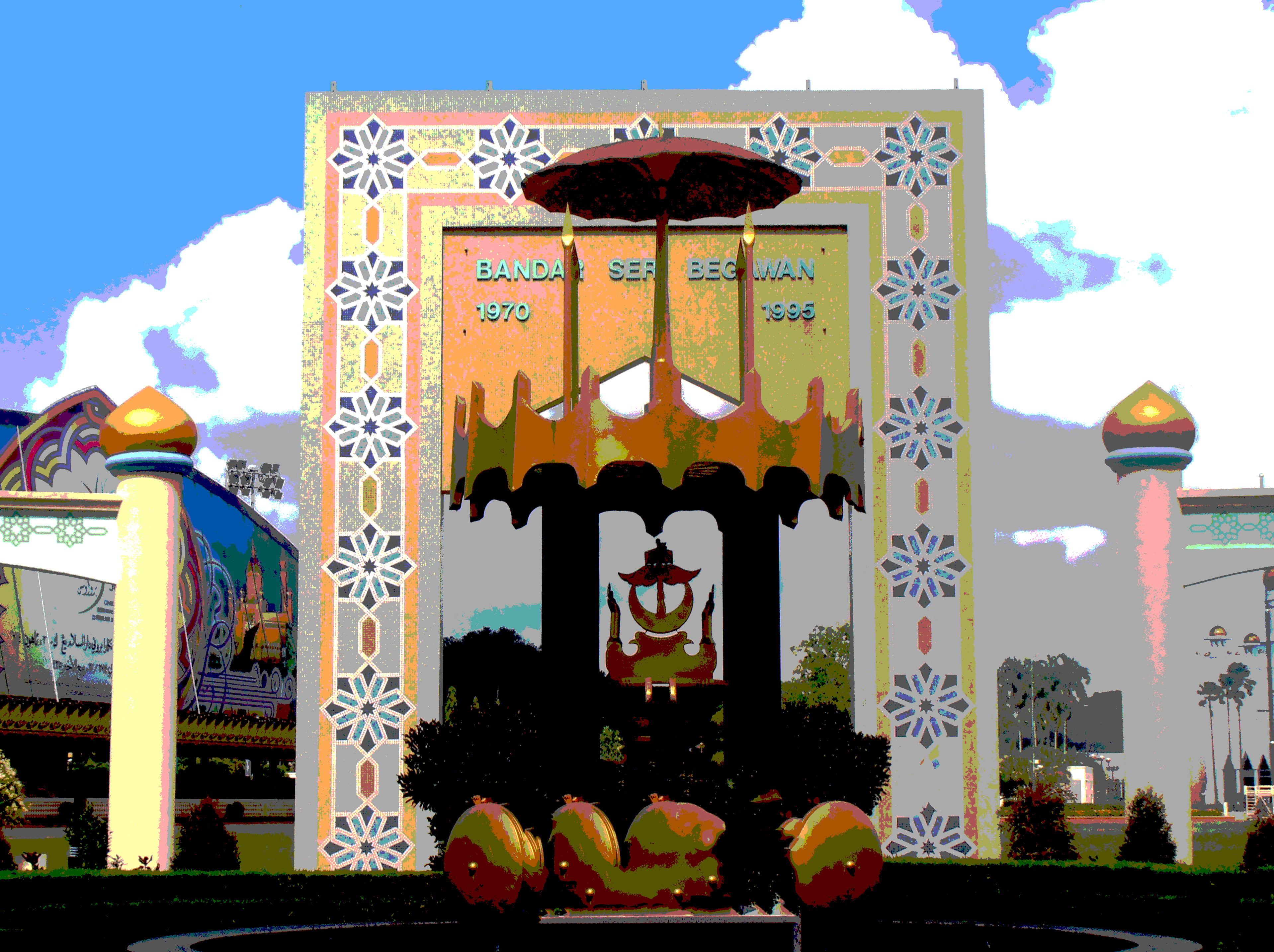
Many people have never heard of the tiny country of Brunei, a conservative Muslim state bordering Malaysia on the island of Borneo.  Brunei is beautiful, rich, unspoiled, and at the heart of a controversy. I was fortunate to be able to travel to Brunei this spring, only a couple of weeks before it made international headlines for its plans to implement shariah law in the country.  All of a sudden, the Sultanate of Brunei was not just an attractive vacation destination but one of only a handful of countries in the world to support such punishments as flogging, stoning, and amputation for crimes ranging from abortion, theft, adultery, and homosexuality.  Even the likes of Jay Leno and Ellen DeGeneres got in on the Brunei-bashing after the media learned that the Sultan of Brunei owns several large hotels around the world — one you may have even stayed in.

The Sultan of Brunei doesn’t care what the world thinks; he wants shariah law for his country, and he runs an absolute monarchy.  It’s ghastly for most of us to think of the kind of punishments his judges are ready to dole out to offenders.  But did I think about stoning, amputation, and flogging while I was wandering around Bandar Seri Begawan, Brunei’s capital?  Nope.  I felt like I was in a fairy-tale land of gorgeous architecture, polite hosts, and peace and quiet.  Mind you, I’m not exactly the kind of person, or tourist, that Brunei (or Islam) may want to encourage: single, female, childless, wandering around on her own with a map and a credit card.  Yet (as long as I had the headscarf on) I was treated with respect, kindness, and asked how I liked the tiny country that no one in North America seems to have heard of.

Do I agree with shariah law?  No, but I respect Brunei’s decision to implement it; it’s their country.  I sincerely hope that it doesn’t scare away tourists, incite anger against Islam, or forever scar Brunei’s image as the “Gateway to Borneo.”  Hey, are you going to get an abortion, commit adultery with a Muslim, steal, or cross-dress on your week-long vacation to Borneo?  And, if so, do you really think those shariah laws are going to apply to you?  Answer to both questions: mmm, probably not.  So don’t forever cross Brunei off your list because of sociopolitical reasons.  Not only will you be missing out on Borneo, but you’ll never see some of the most stunning architecture in Southeast Asia.

The Omar Ali Saifuddien Mosque

The vision-of-white Omar Ali Saifuddien Mosque gleams in the sunlight

Celebrating its independence from Britain in 1984

Brunei only declared its independence as a country in 1984, which might have something to do with its continued struggle for identity

For better or worse, the sheer beauty of Islam's art and architecture distract me from its debates and growing pains

For better or worse, the sheer beauty of Islam’s art and architecture can distract you from its debates and growing pains

The Omar Ali Saifuddien Mosque glows at dawn and dusk

The Omar Ali glows at dawn and dusk

I cannot fully imagine living somewhere where I could be handed a sentence of stoning or amputation.  Can you?

I cannot fully imagine living somewhere where I could be handed a sentence of stoning or amputation. Can you?

There are little signs of life at the Lagoon in downtown Bandar on a beautiful weekday afternoon.

There are little signs of life at the Lagoon in downtown Bandar on a beautiful weekday afternoon…

Life goes on for the 400,000 residents of Brunei, one-third of whom are not Muslim.

But, life goes on for the 400,000 residents of Brunei, one-third of whom are not Muslim.


Bangkok: The Perfect Place to Unwind?

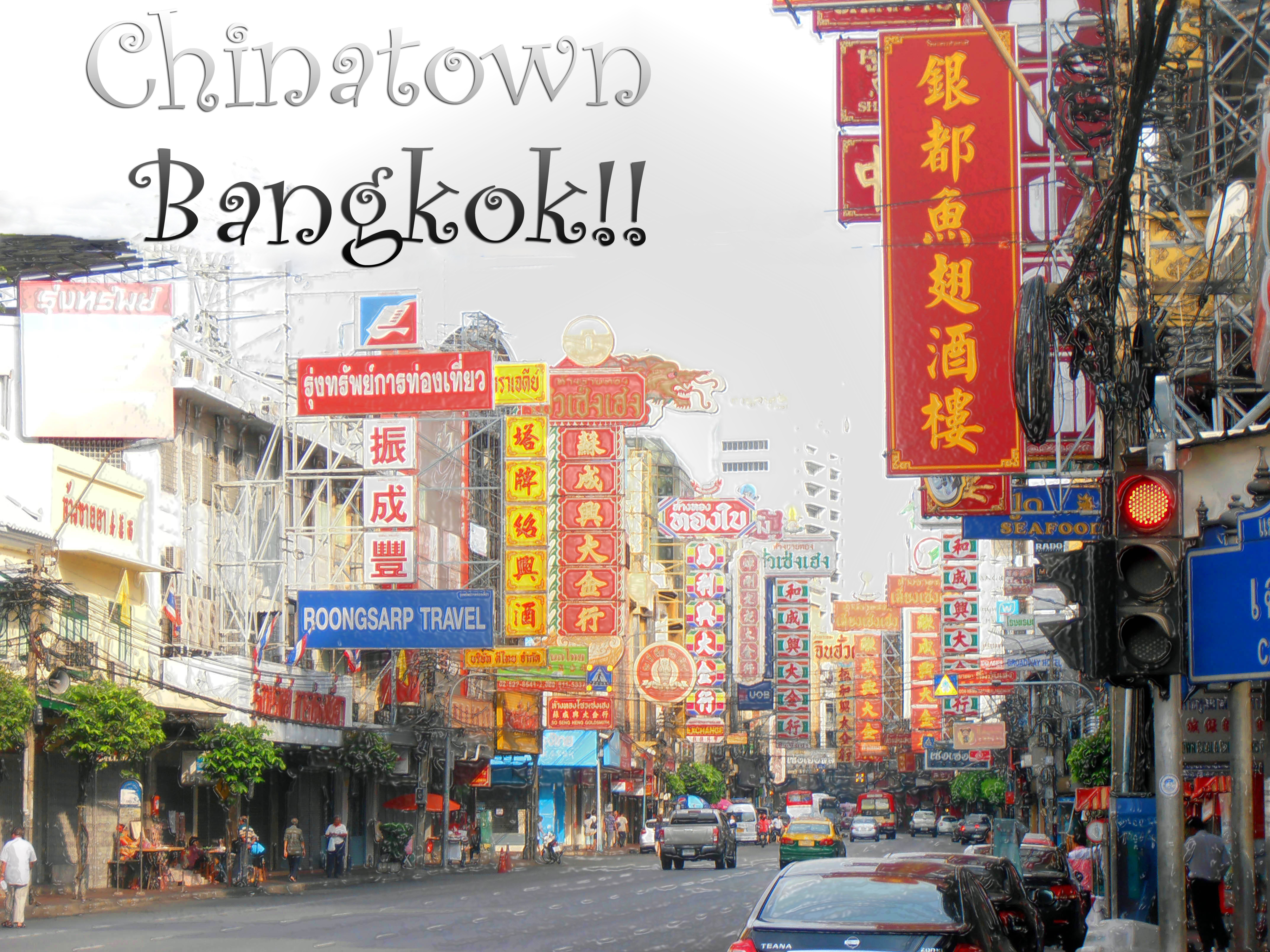
I know this: Bangkok  is never going to make the list of top ten tranquil vacation destinations in the world.  Suicidal tuk-tuk drivers, miles of sky-train soaring over one’s head, loud Thai folk music, gargantuan malls, canals cheerfully gargling with life, and enough shrine incense to get you high won’t exactly raise you to a Zen-like state.  Instead, you’ll get so caught up in the activity around you that you’ll completely deprogram.  What was so important in my life before I came to Bangkok? you’ll wonder.

Those candied colors and warm faces swirling around you will reassure you that everything you need to feel really good is right here.  The tension will slowly leave your body and your headaches will become a thing of last week — I mean, of the past.  Your heartburn will go away (as long as you stay off of Khao San Road) and your blood pressure will lower as smoothly as Buddha’s arm.

So why isn’t Bangkok on your short-list?  Never mind, just take this virtual stroll with me.

On the stroll to the Golden Mount.

On the stroll to the Golden Mount.

'Nuff said.  Bring your cash and your sense of humor!

Bring your cash and your sense of humor!

You are delusional if you think these things come with seat belts.

You are delusional if you think these tuk-tuks come with seat belts.

Asiatique, new fixture in Bangkok.

Asiatique, new fixture in Bangkok.

Khao San Road, home to foreign mercenaries, missionaries, and misfits.

Khao San Road, home to motorcyclists, mercenaries, muggers, and misfits.

This is the view from the taxi, whose driver has never heard of Prozac.

This is the view from my taxi.

Be sure to wrap your expensive electronics in plastic on the streets, or a drive-by squirting may result in a panic attack.

Be sure to wrap your expensive electronics in plastic on the streets, or a drive-by squirting may result in your panic attack.

Another gorgeous shrine to help you relax.

Another gorgeous shrine to help you relax.


The people who live here have never heard of Prozac.

The people who live here have never heard of Prozac.

The mystique of the monastery

The mystique of the monastery

Home sweet home on the Chao Phraya River.

Home sweet home on the Chao Phraya River.

You, too, can find inner peace under a gray sky.

You, too, can find inner peace under a gray sky.

Bangkok's canals provide a restive retreat from the hectic pace of the cit -- never mind, just get in.

Bangkok’s canals provide a restive retreat from the hectic pace of the cit — never mind, just get in.

I'd like my place of worship all in pastels, please.  Gosh my local church needs a makeover.

I’d like my place of worship all in pastels, please. (Gosh my local church needs a makeover.)

Something about Buddha can just make you feel trippy.

Something about Buddha can just make you feel trippy.

Quintessential Thailand.

Quintessential Thailand.

What Bangkok looks like when you're severely jet-lagged.

What Bangkok looks like when you’re still really jet-lagged.  But at this point, you don’t care!

How to Find a Quiet Place to Relax in a Crowded Foreign City

Do you often come back from a trip and feel like you need a “vacation to recover from your vacation?”  You’re not alone.

Many people feel this way because they didn’t let themselves decompress at any time while they were away.  Given the greater emotional and physical energy exerted during a trip, it’s easy to feel drained or overstimulated during and after travel.   Finding a tranquil place to relax and regroup during your trip is one of the most obvious ways to prevent mental or emotional burnout — and keep every day of your vacation feeling (almost) like the first day you arrived.

Unfortunately, traditional “quiet” places may turn into anything but if everyone else decides to go there for their own relaxation.  Think of oceanside cafés that get so loud you can’t hear the waves washing up; well-known churches that sound like malls inside; and parks that put you in the path of an impromptu tag game – hardly anyone’s idea of peace.  Don’t think you have to return to your hotel room mid-day, or wander into an isolated (and potentially dangerous) area in order to “get away from it all.”  Here are a few universal, but often overlooked, places to unwind.

Botanical gardens.  These can sound like a bore to those not interested in plants, but botanical gardens have all of the relaxing characteristics of parks, but because of the (usually) small entrance fee, attract a different crowd; your chances of encountering skateboarding teenagers, drunks, or soccer practice are slim to none.   There is usually no shortage of places to sit down, and you can generally stay as long as you want after paying the day’s admission.

Universities.  Many universities have the look and feel of self-sustaining villages, and you’d have a hard time finding one without some green areas and benches (and often a pond and some wildlife).  Frat and sorority houses are less common outside North America, and while there’s obviously going to be plenty of activity on the main thoroughfares on weekdays, the overall atmosphere – especially on weekends – is subdued.  Another plus is that many universities are easily accessed within metropolitan areas, and even the grounds of most private universities are open to anyone.

Zoos.  You’d be hard pressed to find a zoo without an attractive, natural setting – and interacting with (or just watching) animals can quickly pull you out of your head and back into the moment.  About half of all major world cities have a zoo within three miles of tourist areas.  Try visiting on a weekday evening, or mid-afternoon after school groups have cleared out.

Embassy areas. These neighborhoods are particularly prominent in capital cities, and are often in easily accessible areas.  Although there aren’t many places to sit down, they are certainly a great place for a quiet stroll.  Embassy neighborhoods are rarely crowded, aesthetically pleasing, and you can let your guard down because security is second to none.

Stationed trains.  Particularly in European cities, long-distance trains pull into a station well before departure – by an hour, and sometimes more (especially if your city is the route terminus).  A parked train can be a very peaceful alternative to trying to rest your mind and feet in the chaotic main station hallway.  I’ve done it many times and not been bothered by attendants or conductors (unlike airplanes, which are usually swept and cleaned after every flight, the usual train is only serviced at the end of the day).

Obviously, you need to make sure the train doesn’t roll away taking you someplace you don’t want to go, but the chances of this happening are minimal as you’ll notice people start trickling in about ten minutes before departure.

Off-hours and hideaways in hotels.  After the maids have come through, and before the next round of guests check in, is an ideal time to get some peace in your hotel room, especially if it’s anything but tranquil in the evening and early morning. The ideal time window is usually between noon and three p.m.

If you’ve already checked out of a hotel, don’t feel bad about relaxing in the lobby a few hours after giving up your key.  It’s unlikely that any hotel employee will ask you to leave just because you’re done and paid for; after all, they want you to come back on your next trip, and write a nice online review about your stay.

Finally, a surprising number of hotels – particularly in Europe – have rooftop terraces.  These are often underutilized, because 1) guests aren’t aware of them, or 2) they simply forget to head up there.  The terrace can be a great escape when everyone else on your floor seems to be checking in, or coming in and out of their rooms, at the same time.  An added benefit is that you get to see the city from a bird’s-eye view, which can make it look less intimidating and give you a better perspective of where you are.

Airport quiet spots.  For some peace and space, many people know to head to the waiting area of a deserted gate.  Less commonly sought, but equally quiet places include interdenominational chapels (many international airports have one, and you don’t have to pray in order to use the room), and the lobbies of pre-check-in areas.  Most people automatically rush to the check-in counter and through security when they arrive at the airport, passing by many empty waiting areas adjacent to the airline ticket counters.

It's not always practical to find a place like this to unwind, but there are still plenty of places to relax if you know where to look. ( Pictured: Suomenlinna, Helsinki, Finland.)

It’s not always realistic to find a place like this to unwind, but there are still plenty of places to relax out there — if you know where to look. (Pictured: Suomenlinna, Helsinki, Finland.)

Establishing Straightforward Relationships as a Foreigner: Understanding Types of Interactions, and Roles

It might be unnerving to think about negotiating with strangers for what you need and want on a trip.  Asking for help, receiving services, or making arrangements with people you don’t know can expose you to a wide range of personalities, moods, cultural differences, and the occasional thoughtless or rude response. As a traveler, it helps to view your interactions as falling into one of two categories: 1) those that you have to initiate, and 2) those that the other person has to initiate. Another way to think of these respective categories is:

  1. Those interactions that you can’t control, and
  2. Those that you can.

Generally, if you’re paying for a service, then someone else has to initiate the interaction – and will likely do so in a courteous and sensitive manner (yes, I know, this is a very optimistic assumption!).  Since as a tourist you are paying for a number of things including hotels, airfare, secondary transportation, and meals, the majority of your interactions will be those where the other person must approach you and offer what you need and want.  Understanding this can go a long way towards mitigating your anxiety since breaking the ice with someone is almost always the most stressful aspect of an interaction.  Let tour guides, waiters, bellhops, maids, flight attendants, and hotel receptionists do their jobs, and relax.

Examples of interactions that you usually initiate include those with taxi drivers; when asking for directions or help; when making reservations or arrangements you haven’t yet paid for; or with unresponsive service staff.  If you’re like most people have some anxiety, you try to keep these interactions to a minimum – or resort to email for reservations or to file a complaint.

There are several scenarios where either you or another person may initiate an interaction, such as with store clerks, police or security, other guests, or other tourists.  In some cases you’ll want or need something enough that you’ll broach someone whether it causes you anxiety or not; in other cases, someone may notice that you need something, or are having problems, and come to you.  You’ll have to decide whether it causes you more stress to approach someone out of the blue, or wait a while to be approached.

Is there a correlation between how much money you spend and how much thought you have to put into interacting with others?  Not necessarily.  Although budget travelers are going to pay for fewer services and have to be more proactive in getting what they need, people who are traveling in luxury are going to have more discretion in their interactions with a large number of service people, and may spend a lot of time and energy concerned about how much to tip, who to call for a certain type of service, etc.  Things are going to be most straightforward for middle-of-the-road travelers.

Roles you play

There are basically three roles you play as a tourist.  These are:

  1. Customer;
  2. Guest in country; and
  3. Fellow tourist.

Once you realize that this is how others see you, you may lose a lot of fear of interacting with others.  Here are some things to be aware of regarding each of your roles.

Customer.  Despite your status as a paid customer at a hotel or on a flight, train, ship, etc., you might encounter some unwarranted negativity from service people that causes you distress.  It may seem obvious, but different service people will have different attitudes toward tourists.  Many are in their jobs because they enjoy interacting with people around the globe; others are frustrated with working for low wages, and resent that you have the means to vacation thousands of miles away.

If you’re stuck in a days-long arrangement with stress-inducing service staff, try softening them up by getting their mind off work.  You can usually do this by talking about what you love about their city, compared to what you don’t like at home.  Frustrated people want to rediscover their surroundings, or see that they have things better than they realized – and curiosity about what your home country is really like often gets the better of their unfriendliness.

Guest in country.  If you wander off the typical tourist path, you may interact with the people of your host country outside of just the service sector.  This could be at a supermarket, a bus stop, or a post office, where – depending on how provincial your destination is – you could be stared at or treated as something of a novelty.  Friendly and curious people can cause you to feel very awkward without intending to.  If their attention or scrutiny causes you anxiety, remember that you have a lot of control at the start of an interaction with someone, but the longer you engage, the less you’re able to deny invitations or queries without stress.  Do your share of smiling and excusing yourself – and move on with your business.

There are plenty of stories about Americans (and a lot fewer about Canadians) who are openly derided or snubbed abroad, but if you’re traveling alone or with only one other person, you’re far more likely to be judged as an individual rather than subject to stereotypes.  Some of the personality traits that are common among anxiety sufferers, such as being reserved and sensitive to the needs of others, work against the usual stereotypes applied to Americans, and in your favor.

Fellow tourist.  Consider this: you’re more likely to have an unpleasant experience with other tourists than with service personnel or locals.  This is because you’re essentially competing with other tourists for the best seats, space, or attention wherever you go.  People from different cultures may demonstrate a variety of impatient or aggressive responses when it comes to seeing what they want to see, and going where they need to go.  Keep in mind that your public behavior may be equally unfamiliar to them, and may even come off as arrogant or threatening, even if this is the last thing you intend and you’re behaving like you always would.

Despite these challenges, you should be prepared to occasionally interact with other tourists to get what you need or want.  You may need to use someone else’s phone because your battery has gone dead, or you could need a couple bills of the local currency because the local TravelExchange kiosk doesn’t open for hours.  The basic rule is to not expect any favors from other tourists.  If you need something, you should have something to offer in exchange.  This could be, for example:

Ÿ                     Your still-valid metro ticket in exchange for someone’s map;

Ÿ                     A camera trade to take pictures of each other in front of landmarks; or

Ÿ                     A couple Euros in exchange for using their cell phone for a few minutes.

Making it clear what you have to offer, and what you would like in exchange, makes it difficult for the other person to say no, yet doesn’t make you come off as pushy or demanding.
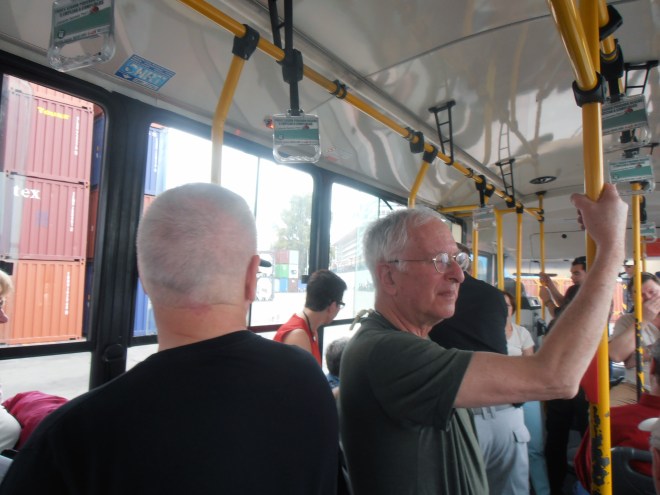
On the shuttle bus from Buenos Aires to the cruise port.  Do you folks mind moving over so I'm not standing on the red line?

On the shuttle bus from Buenos Aires cruise check-in to the Celebrity port. Would you folks mind moving your luggage so I’m not standing on the red line when the door opens?

Special Photo Essay: How Stress Affects the Way We See Places

It’s no secret that stress and anxiety affect how you perceive your environment — particularly when you’re somewhere unfamiliar.  Your surroundings can look blurry, distorted, dull, glassy, and just plain intimidating when you’re nervous and overwhelmed.  The question is, just how different do things look when you’re under stress?

While in Istanbul a couple weeks ago, I stayed down the hall from a woman who didn’t leave her hotel room for two days because her journey was “just too much” and “not what she was expecting.”   She looked like she wanted to fall asleep in her bathtub with a good book and a glass of wine, and forget all the “adventures” just outside her door.  What did she — and other nervous travelers out there — see that others didn’t?  Here’s an exploration — and a reminder that our mind creates our own reality.
OLYMPUS DIGITAL CAMERA

1. People with a fear of flying can feel lightheaded and suffer blackouts, particularly during landing and take-off.  The world below can look dark and out of focus.  The reality?  Your plane window isn’t that dirty — and although it’s a lot to take in, that wonderful first view will be one of your longest-lasting memories.

OLYMPUS DIGITAL CAMERA

OLYMPUS DIGITAL CAMERA

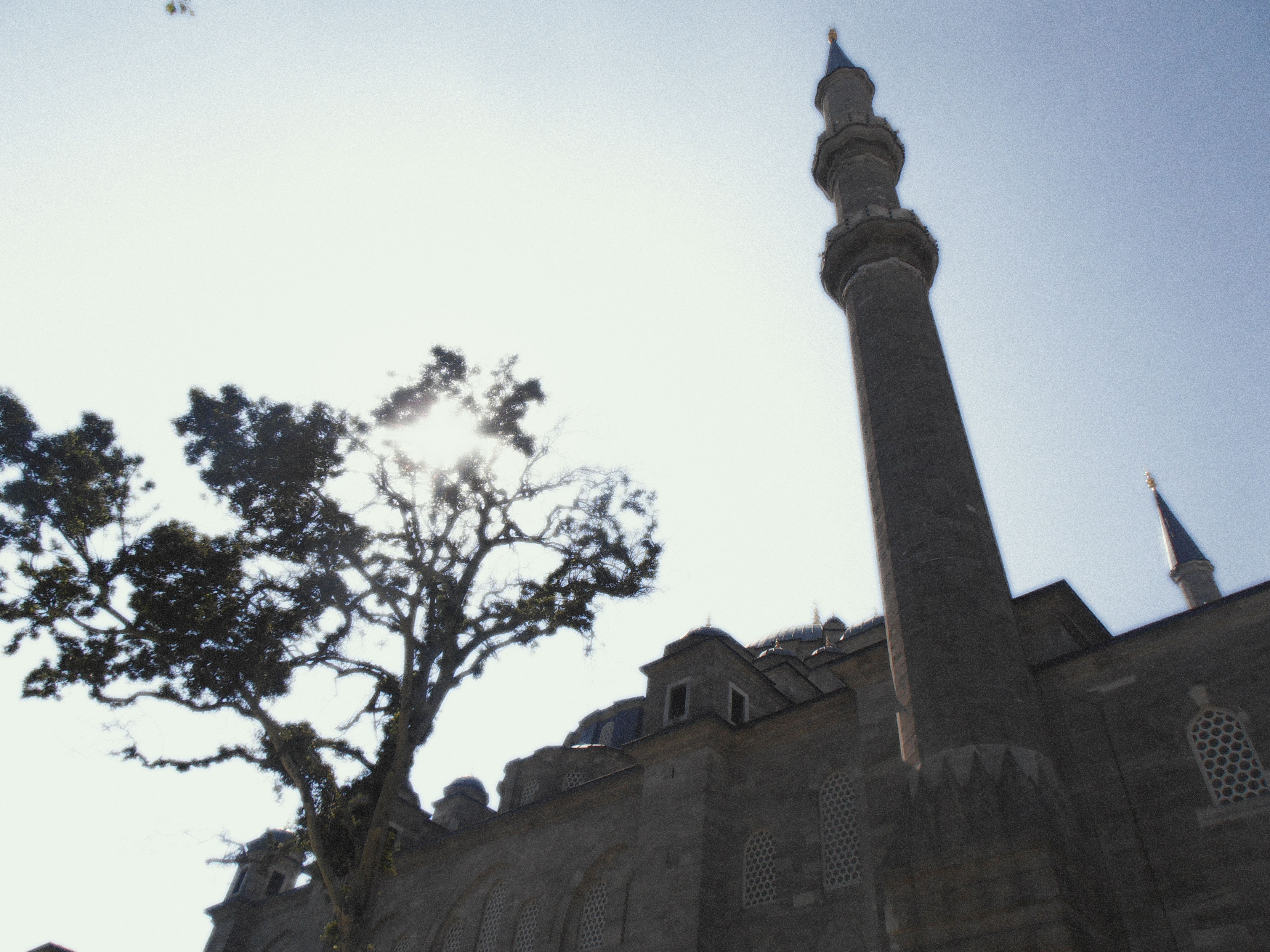
2. Surrounded by strangers and unfamiliar skylines, we may not get the full detail in front of us even if our vision is 20/20.  Why?  Our minds tend to “blur things out” to protect us from sensory overload.

OLYMPUS DIGITAL CAMERAOLYMPUS DIGITAL CAMERA

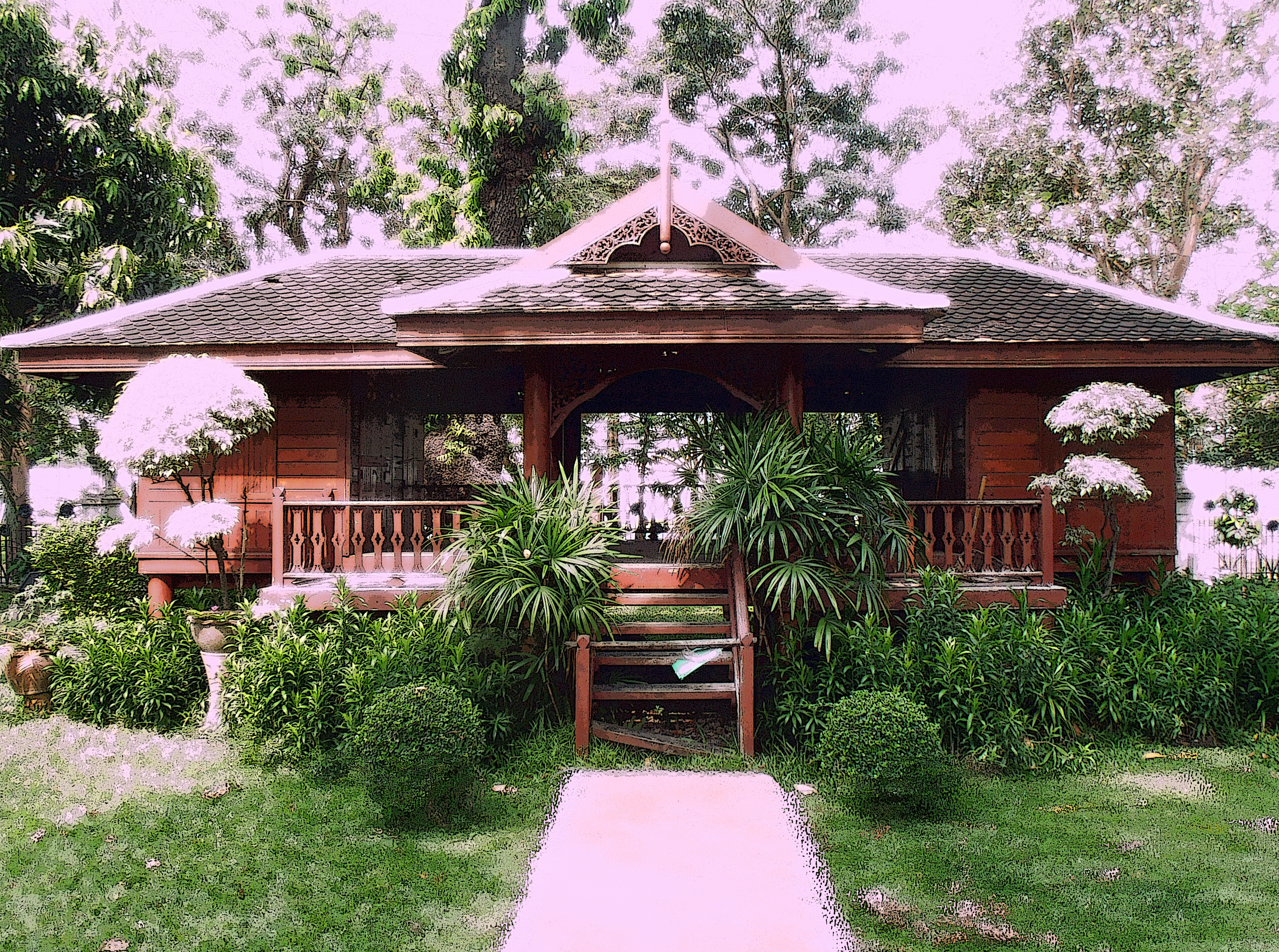
3. We tend to view people and our surroundings in more simplistic terms when we don’t understand the culture of the place we’re visiting.  Even though we know it’s not accurate, we can see only the outlines and colors of the unfamiliar instead of “the full picture.”

OLYMPUS DIGITAL CAMERA

OLYMPUS DIGITAL CAMERA

4. Buildings we’ve never seen before can be intimidating and look distorted to us, while strangers may seem larger than life.

OLYMPUS DIGITAL CAMERA

OLYMPUS DIGITAL CAMERA

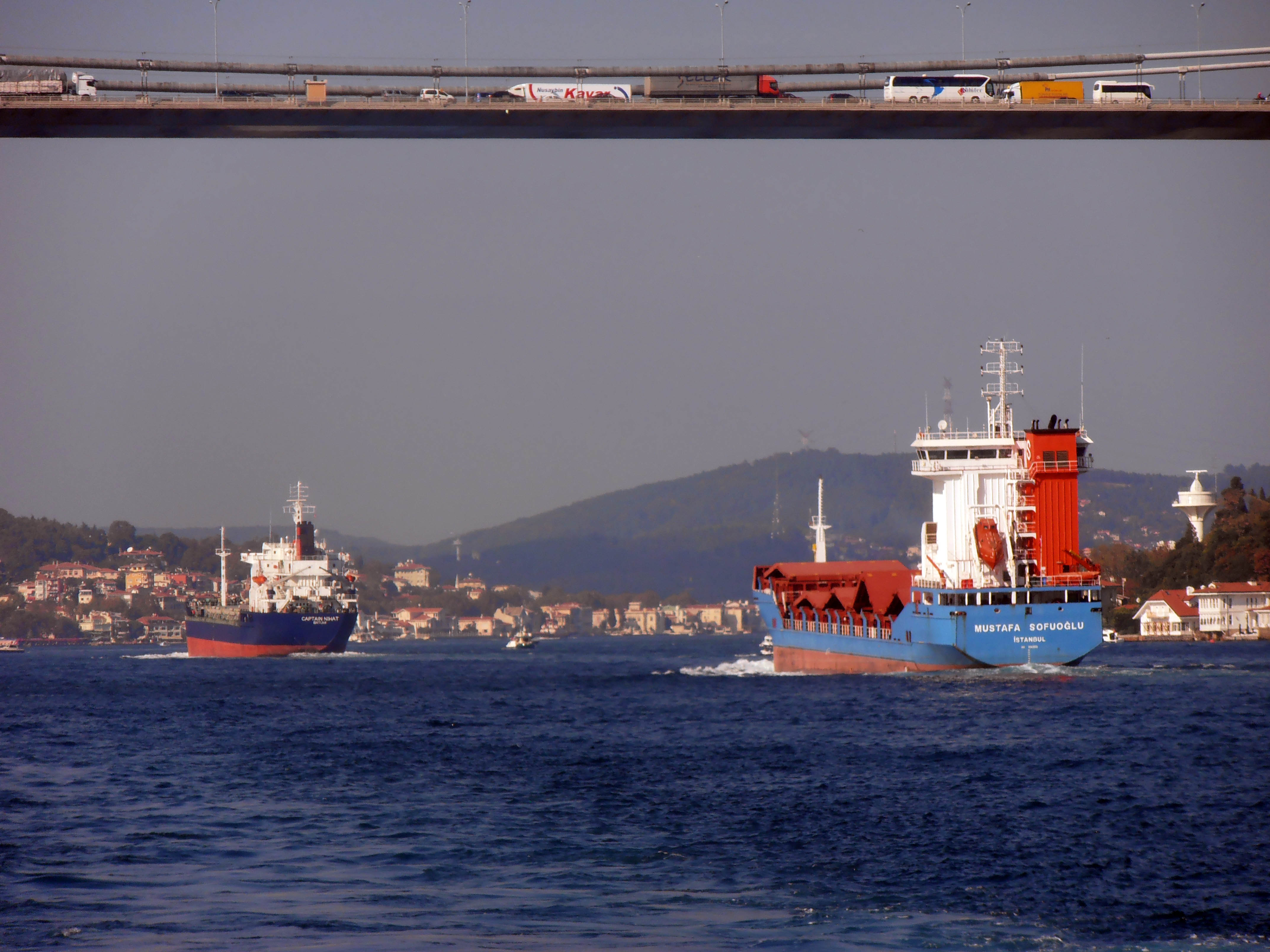
5. We can struggle to bring even the most relaxing scenes into focus, and see only a clutter of dark objects in our ship’s path.

OLYMPUS DIGITAL CAMERA

OLYMPUS DIGITAL CAMERA

6. We may be oblivious to detail even in less distracting environments — and may barely notice the sun shining down on us.

OLYMPUS DIGITAL CAMERA

OLYMPUS DIGITAL CAMERA

7. Exotic locales can have a two-dimensional, mottled quality to them, like something we saw in a book long ago — and not quite real in front of us.

OLYMPUS DIGITAL CAMERA

OLYMPUS DIGITAL CAMERA

8. We can revert to tunnel vision, especially when we see something that looks too precarious to be true.

OLYMPUS DIGITAL CAMERA

OLYMPUS DIGITAL CAMERA

9. When we’re a bit turned around getting back to the hotel, we can literally feel pushed back or pulled forward by our surroundings — and we don’t even notice our reliable landmark in the distance.

OLYMPUS DIGITAL CAMERA

OLYMPUS DIGITAL CAMERA

10. If just being at the airport stresses you out, you may see a tube of dread waiting out on the tarmac instead of the full picture.

OLYMPUS DIGITAL CAMERA

OLYMPUS DIGITAL CAMERA

11. Know you have a stunning view outside your window? Look too hard, and you’ll see yourself staring back; relax, and you’ll be floating above the clouds.

OLYMPUS DIGITAL CAMERA

How Your Vacation Can Change Your Beliefs and Attitudes in Unexpected (and Sometimes Stressful) Ways

What’s that rumbling sound you hear when you’re sitting on the tarmac of an airport thousands of miles from home as your trip draws to a close?  Sometimes it’s not just the plane engines firing up.  It’s your thoughts swirling, and perhaps even grinding, grating, and crashing right into beliefs you’ve had for years as you have a chance to put into perspective everything you saw and did on your trip — and what you discovered about how others live in another culture.  It may be hard to comprehend, but for something that lasted only about two or three weeks, a vacation can have a tremendous influence on some of your most long-standing and innate beliefs.

These are not necessarily things we feel comfortable thinking about, or discussing with others — which makes them all the more important since they can cause you stress if you ignore them.  Here are some deeper issues many travelers struggle with at the end of (and well after) their trip that can have a significant impact on their psyche.  Chances are you may grapple with some of the same thoughts.

About religion.  Every year thousands of people convert to a different religion — from Islam to Christianity, from Christianity to Islam, from Christianity or Islam to Buddhism, from any of the above to atheism or agnosticism, etc.  Many people make this conversion after visiting a country whose religious following is different from their own.  Does that mean you will?  Probably not, but that doesn’t mean you won’t experience a change in your thoughts about the afterlife after visiting a place like The Vatican, Tehran, Jerusalem, and any other number of places.

Having these feelings can cause you anxiety depending on your religious upbringing and the attitudes of your family members (and even your friends).  Acknowledging that you could have some significant doubts, inspirations, or personal questions after your trip can make it easier for you to address them in the coming weeks or months and move forward on your personal and spiritual journey.

About race.  Want to hear a sad story?  I had a friend who wasn’t racist until he started traveling.  Going from country to country, he said, and having what he perceived to be negative experiences in developing countries, helped him see “the bell curve” and people “in their proper place”, i.e., how important it was that people had their own culture within their own borders.  Is my friend still traveling?  More than ever — and I hope I don’t run into him somewhere.

Most people become even more tolerant after they’ve been abroad and seen other branches of the human family; very few become prejudiced, or more prejudiced.  The vast majority of us will spend some time thinking about how we’re all different, how and why there’s been so much racism in the past, and what the picture of racial harmony could like like in the future.

About the importance of money.  Did you travel through impoverished villages on your trip, and have the time of your life exploring and meeting the residents?  Alternatively, are you a middle-class traveler who lived like a king or queen for a couple weeks in a developing country, simply because you could afford it?  Doing either can significantly change your perspective on what’s in your wallet, how much you think you need to lead a happy life, and what you do with your finances in the future.

About the future.  Many people feel an overwhelming sense of hope and awe over the promise of the future after they’ve been abroad.  In so many ways, humanity leaps forward every year in terms of quality of life, tolerance, development, progression, and pure inspiration and creativity.

Depending on their travel experiences, others can dwell on the more negative aspects of the human race — yes, how greedy and self-absorbed we are, how much environmental damage we’re causing, how a major world war could be coming within our lifetime, how likely there is to be a major epidemic, etc.

You shouldn’t be surprised if you experience all of the above thoughts, hopes, and fears about the future on the same flight home.  We’re all constantly dealing with the balance of good and bad, hope and pessimism, and of course, change.  Travel is synonymous with change.  How it changes you is up to you — just don’t let it cause you a lot of stress. OLYMPUS DIGITAL CAMERA

New perspectives don’t always come beautifully framed — but travel always helps us see life in a different light

Afraid to Vacation in These Places? You’re Not Alone

Should you visit them anyway?  Absolutely, if you’ve dreamed of going there for years.

Where, exactly, am I talking about?  Egypt?  Yemen?  Mali?  El Salvador?  No, I don’t mean countries that are considered major and immediate threats to your safety and security, and routinely make the State Department’s travel warning list.   I’m talking about six major global cities that many tourists shy away from for various reasons: concerns about their geopolitical position,  racism, unfamiliar laws, severe air pollution, military unrest, and other hazards that have a statistically minimal chance of  threatening your well-being on a trip.   These cities have dubious reputations — and yet they offer visitors an amazing array of things to do and see that outweigh their drawbacks every time.  Without further ado, these are my picks of the  greatest big cities you might be missing out on.

1. Seoul, South Korea.  This Asian gem has the drawback of being only about 40 miles away from the border of one of the most dangerous dictatorships on the planet.  And yes, North Korea has threatened Seoul many times — and not a whole lot has happened.  Year in and year out, Seoul is on par with Tokyo in terms of its appeal: ultra-modern, with a high standard of living and brimming with cultural treasures, attractions, and great shopping and dining — and boasting some of the safest streets in Asia.  Yet people stay away in favor of Japanese and Chinese cities that are a lot farther outside a possible North Korean missile strike.  What if?  What if?  What if you got on a plane to see Seoul in addition to Tokyo and Beijing?  Your chances of getting trapped in a North Korean air raid are about the same as your likelihood of never reading another blog for the rest of your life.

2. Cape Town, South Africa.  When most people think of South Africa, three things usually come to mind: soccer, racism, and crime.  While it’s true that crime rates are high in South Africa, and that the devastation caused by apartheid can still rear its ugly head, Cape Town does not suffer from these problems nearly as much as the capital city of  Johannesburg.  And this doesn’t even begin to give Cape Town the credit it deserves for being such an amazing destination: on the ocean, full of natural wonders and cosmopolitan nightlife, and teeming with friendly and open-minded people.  Still make you uncomfortable to go somewhere that’s been so deeply affected by racism?  Go there, smile, have a drink, start talking and forget what you and everyone else looks like.

3. Macau (Special Administrative Region of China).  This densely populated “Las Vegas of China” has often gotten bad press for its untamed casino life, toxic air pollution, and chaotic, pedestrian-unfriendly streets.  It’s also one of only two great cities in China that most Westerners can visit without a visa — and it’s a short, very scenic ferry ride from Hong Kong .  Yes, you don’t want to breathe deeply in Macau; you don’t want to head there restless either, since the whole SAR is only about twelve square miles.  Perhaps that’s why most people are in the casinos — and when the air does clear after a good rainstorm, go outside and check out some of the amazing architecture inspired by the fusion of classic Chinese style and Portuguese colonialism.  ( Just make sure not to jaywalk.)

4. Singapore. At first, Singapore might seem like an odd pick for this list.  But does anyone remember Michael Fay?  He’s the young American who, in 1994, was caned and imprisoned for four months for non-violent crimes (vandalism and theft).  Since then, Singapore has been as notorious for its draconian laws as its diverse attractions and spotless streets.  If you tend to do reckless or impulsive things when traveling (particularly when drunk and not in full control of your inhibitions) you might fear doing something in Singapore that could cost you time in jail, or worse.  Even slobs or gum-snappers may have a hard time (forget to flush a public toilet?  You could be fined.  And don’t bring chewing gum into the country).   So what do you do?  Recognize how easy it is to assimilate.  Surrounded by law-abiding, respectful citizens in the downtown area, in the malls, and at the tourist attractions, you’ll realize how painless it is to take a cue from other folks and be on your best behavior.  And because it’s Singapore, your chance of being the victim of theft, assault, and tourist scams are slim to none.

5. Belgrad, Serbia.  Many of us are old enough to remember the carnage of the Balkans War unfold on TV in the 90s.  The war is long over and several functioning democracies have emerged from the former Yugoslavia — but since Serbian rebels were blamed for the bulk of the violence and ethnic cleansing in the 90s war, a negative view of Serbia, and its capital Belgrad, persists.  Is it fair?  If travel teaches us anything, it’s to not stereotype cultures, or hold individuals accountable for sins committed by armies over fifteen years ago.  Last I checked, Belgrad is a vibrant, intriguing city where multiculturalism works, and the welcome mat is laid out for the curious tourist.

6. Tel Aviv, Israel. The number of security issues Tel Aviv faces on a weekly, monthly, and yearly basis might cause anyone to cross this incredible city off their travel wish-list.  Who, you might think, wants to step into the “state of perpetual turmoil”?  Well, lots of tourists, every season of the year.  They’ve discovered that the city’s inhabitants are a special breed entirely — resilient, determined people who manage their fate of constant uncertainty by knowing how to have a good time, and knowing how to make the most of every day.  Israel is not going to solve its problems anytime soon — and Tel Aviv is not exactly “going anywhere.”  You might as well drop in, go to the beach, exercise the usual safety precautions, and have an incredible cultural experience.

OLYMPUS DIGITAL CAMERA

Nervous about venturing outside the “quintessential” and “safe” vacation spots?   It’s natural — but pack your common sense, and go anyway 

Travel, Terror, Strategy, and Luck

It’s August.  I don’t need to know it’s high-travel season; I read your blog entries written from around the world every day.  If you’re not on a trip right now, then you just got back from somewhere, or you’re ready to go abroad, or you’re thinking  about it.  This is the time of year when many of us most want and need a vacation.  Summer is running out; students go back to school soon; the dreary months of the year seem depressingly near.  Many of us wait until August to take our summer vacation because we had too much to do at home in June and July.  We’re relieved to finally, finally be on our way.  Then the State Department issues a travel alert… for the entire month of August.  Do they call it a terror alert?  No, they call it a travel alert.  That makes us feel so much better, right?  And yet do we sit on our passports and let the doubt and fear creep into our minds?  From what I can tell, the answer is definitely no.

The anticipated targets are just vague enough, and just specific enough, to be infuriating.  The embassies are closed across the Middle East and North Africa.  But I’m not in the Middle East, you answer.  Should I stay the heck away from the embassies in all the most popular European capitals because they might be threatened too?  Well, we don’t know.  It would be a “good idea.” It might be a good idea, too, if you weren’t on top of the Eiffel Tower at 3 pm on a beautiful afternoon.  Or aboard The Eye in London the next evening.  Or somewhere else insanely popular at an insanely popular time.  The point is, there are lots of ways to minimize that thing we call personal risk.  Personal risk is about reducing the chance that you’ll be in the wrong place at the wrong time.  And what does it really add up to?  Does something either happen or not, and we’re along for the ride either way?

 The questions really is, does a travel alert actually change our behavior?  I’ve talked to tourists who won’t take a direct flight across the United States because they believe there will be a repeat of the 9/11 attacks.  They will lay over in Toronto on a flight from Los Angeles to Washington, D.C., and then tell me how much safer they feel when they land.  I’ve talked to other people who won’t stay in any kind of large chain hotel overseas because they think that an independent or locally-owned hotel won’t be targeted.  I’ve been on board a flight from Paris to London that was running three hours late, and the people next to me didn’t complain once because they would rather sit on the tarmac all night rather than deal with the stress of riding through the oft-threatened Chunnel.

Personally, the travel alert isn’t going to change my plans to fly into Istanbul next month.  The fact that Turkey isn’t on the Middle East and North African “danger list” hasn’t inspired me to keep my plans.  I just don’t think anything’s going to happen to me.  I trust my instincts, my common sense.  I trust in my vigilance to notice my surroundings, to know when something’s “wrong,” and to be a small part of preventing a tragedy.  Is this arrogant?  Yes, I think so.  It distracts me from the idea that I believe in my own luck to save me from a serious incident abroad.  Am I alone in believing this?  No, I don’t think so.

Most of us will use the travel alert to reduce our personal risk.  We might choose to travel “smaller,” travel more quietly.  We’ll travel “smarter,” whatever that means, and keep an eye out.  The more cautious among us will stay the hell out of and off “popular” destinations and routes, and go to bed thinking about how there’s no strategy for luck.  The more brazen among us will feel more relaxed and invigorated after 2,000 miles on a Eurail pass without seeing a single nervous-looking security guard.  That’s 2,000 more miles without incident… ha!  And we’ll keep going, and going, and going.

If nothing happens this month, then we’ll all feel lucky, and we’ll love traveling (and in one sentimental figurative embrace, the world) even more than we do now.  If something does happen, then we’ll rage over it, we’ll adjust, we’ll wait, and head right back out.  With a more watchful eye this time.

OLYMPUS DIGITAL CAMERA

When I was in Russia in late June, I didn’t say anything to anyone about the two unattended bags below the Olympic countdown clock.  Now, I would.  Would it make me feel any safer?

Can Smartphone Applications Take the Worry Out of Touring?

…or the fun?  And the discovery?

Imagine standing in a foreign street and holding a smartphone out at arm’s length, and having the names and uses of each building in front of you pop up on the screen — along with info about the nearest metro station, store business hours, and more.  Sound impressive?  This type of application is actually pretty common these days.  It uses a technology called augmented reality (AR), which is a live view of your real-world environment, captured on a screen and narrated by computer-generated input (usually text, but also graphics, sound and GPS data).  It can be invaluable if you’re touring where you can’t make heads or tails of the language, or if you have a hopeless sense of direction.  In other words, it can help you avoid getting lost, misunderstood, taken advantage of, and other very stressful situations.

So what’s involved in an AR device?  The hardware usually consists of a processor, a display, and sensors (all three of which are rolled into one unit and shaped to fit your hand) and the output device (usually a headset, which may not be necessary depending on how easy your display is to use).  Standalone units were common at first, but more and more, smartphones and tablets have the camera, sensor, and output needed to support AR.  Right now, the application (including all the required software) averages about $400, and can be worth every penny.  Consider the following it can help you with:

  • ŸIdentifying the full route of a bus you see down the street;
  • ŸPotential hazards in your path (such as poorly marked construction);
  • ŸRoad conditions and traffic updates (if you are driving); and last but not least,
  • ŸTranslating foreign text on signs and menus.

So why isn’t everyone walking around with one on tour?  Well, there are some definite drawbacks to using AR.  Some that I can think of include:

  • Dangerous levels of immersion.  You can get so absorbed in the interface that you become oblivious to your surroundings.  AR will tell you a lot, but not about the bad habits of drivers or the motivations of the people around you.
  • ŸYou can become dependent on AR.  It can erode your observational skills, your intuition, and your problem-solving skills.  Consider the possible effect on your confidence, and your ability to guide others someday (like your kids!).
  • ŸThe application can take some of the discovery and personal experience out of your trip.  If part of your touring enjoyment comes from figuring out whether you’ve just stumbled upon a great tattoo parlor or just a music store, or whether an odd building is a museum or an antiques shop, then think about saving AR for occasional use, when you’re really stuck — or just opting to travel the “traditional way,” with a map in your hand instead.

Image

Can’t imagine where this escalator-in-a-forest leads to?  Me neither, but to be honest, I’d rather just keep walking to find out.